
Nagura Bay & Nagura Anparu | Ishigaki, Ramsar Wetland, Sunset, Mangroves & Access
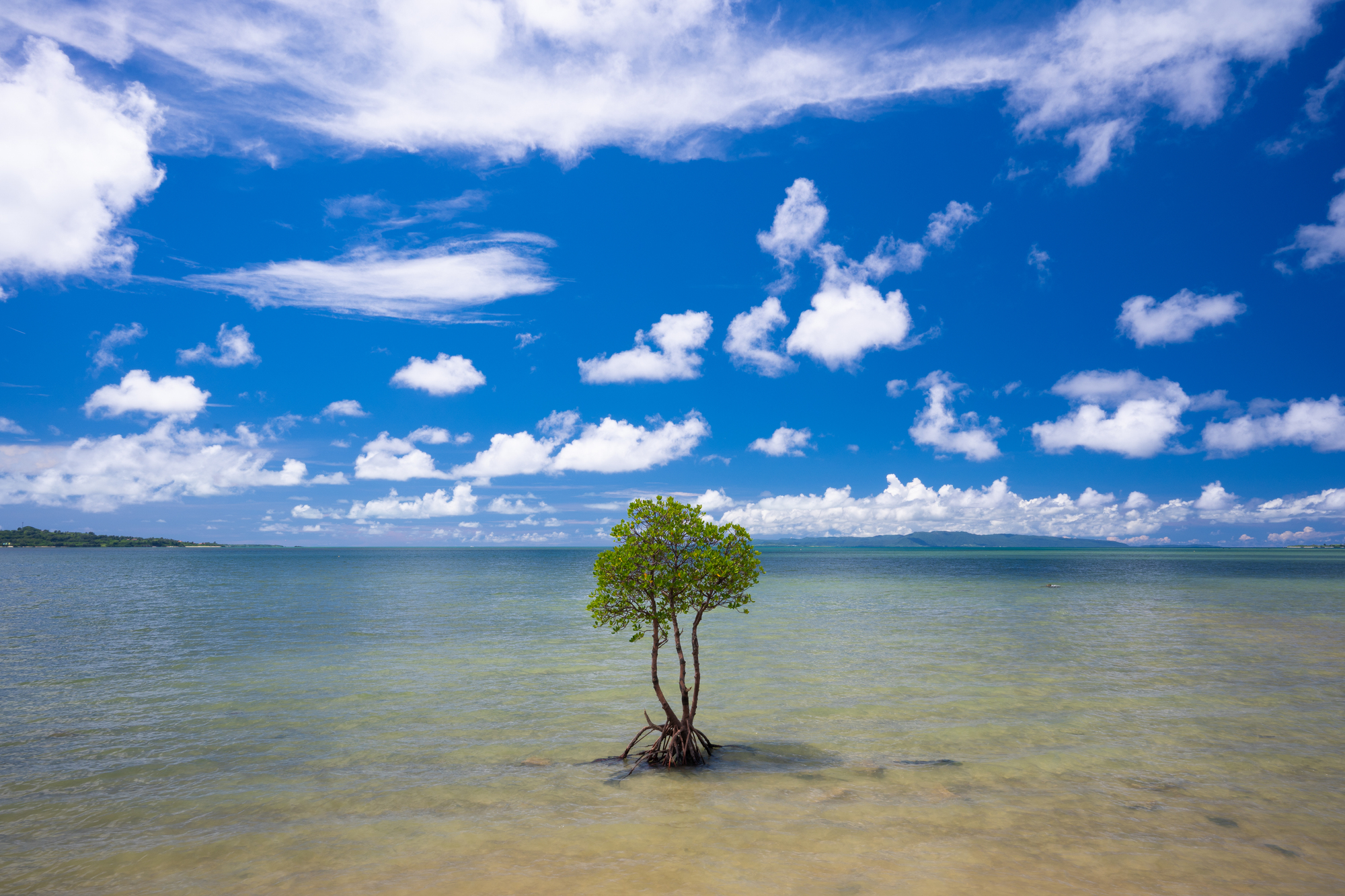
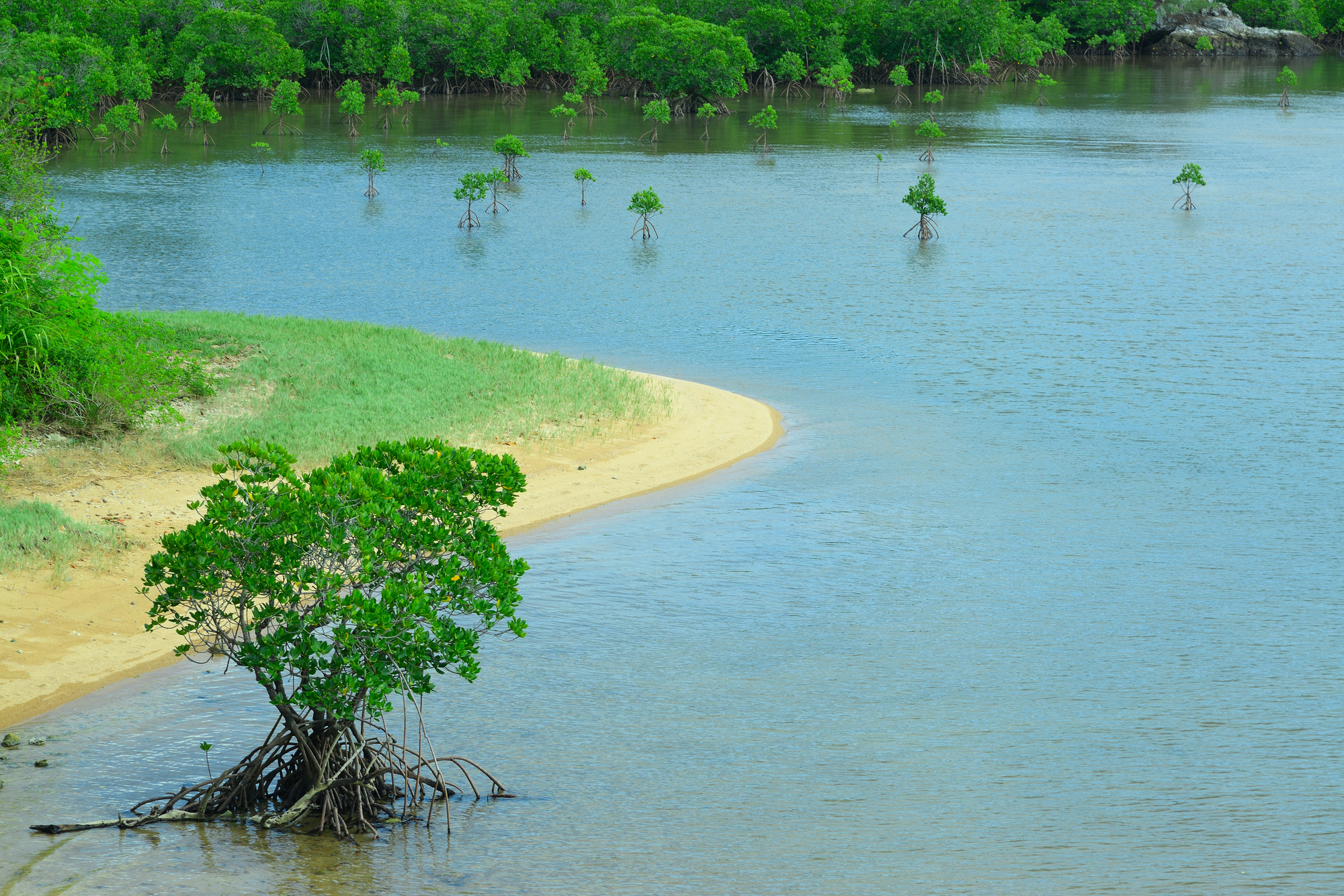
On Ishigaki’s west coast, about 20 minutes by car from town. Nagura Bay and Nagura Anparu spreading at its inner part are Ishigaki’s treasures known to those in the know, rarely listed among the usual sightseeing guides. It’s Japan’s southernmost Ramsar Convention wetland, registered under the Ramsar Convention in 2005—a “paradise of nature” where about 62 ha of mangrove forest, about 20 ha of tidal flat, and wetland grassland are unified.
The great swarms of crabs that all show their faces at once when the tide goes out, the arrival of rare wild birds, a painting-like sunset, and a sunset even called “Ishigaki’s most beautiful”—it’s a spot indispensable for knowing Ishigaki’s depth, enjoyable multi-facetedly as nature observation, bird-watching, and sunset viewing. In this article, we’ll deliver a complete guide to Nagura Bay / Nagura Anparu’s appeal, highlights, access, and observation tricks.
What Kind of Place Are Nagura Bay / Nagura Anparu? Japan’s Southernmost Ramsar Wetland
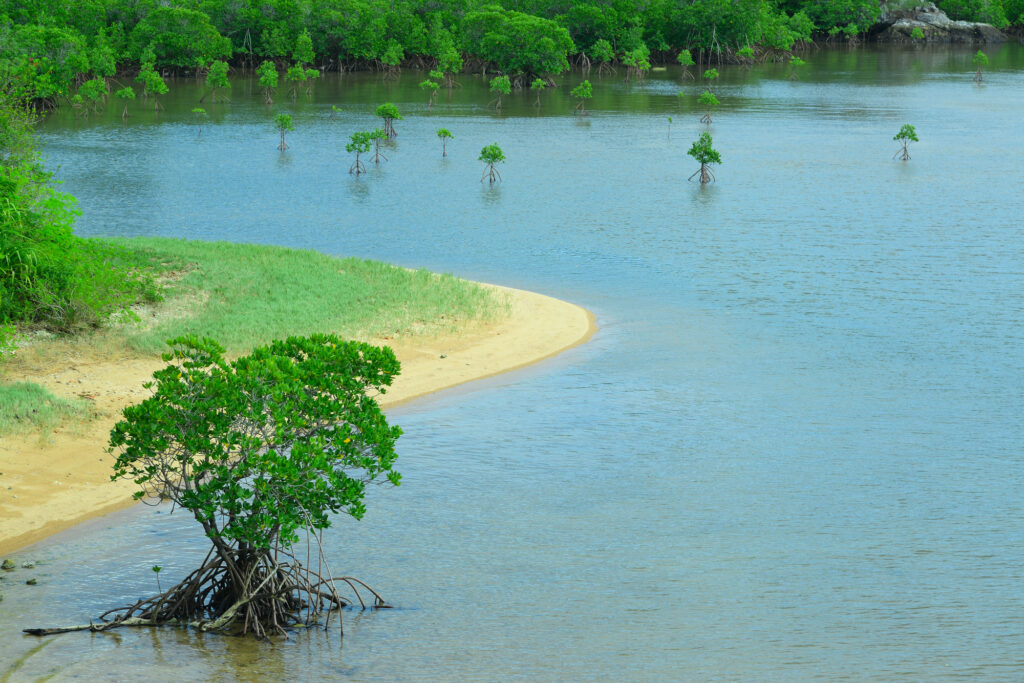
Nagura Bay is a large bay spreading on Ishigaki’s west side, in an area even further north than Arakawa and Tojin Baka. Located at that bay’s inner part is “Nagura Anparu,” an area including the wetland zone, tidal flat and sandbar at the Nagura River mouth. Anparu is a place name meaning “amibari (net-stretching)” in the dialect, said to originate from the place where villagers stretched nets to catch fish.
Nagura Anparu is a vast wetland reaching 157 ha in area, of a scale 1.5 km east-west and 2 km north-south. It’s a precious type of spot even in Japan, where the typical wetlands seen in the subtropics (tidal flat, mangrove forest, seashore, coastal forest) are gathered into one.
Registered under the Ramsar Convention in 2005
Nagura Anparu was registered under the “Ramsar Convention,” the international convention on the conservation of wetlands, on November 8, 2005 (Heisei 17). This is Japan’s southernmost Ramsar Convention wetland. Furthermore, in 2007 it was incorporated into Iriomote-Ishigaki National Park too, and it’s designated as the nationally designated Nagura Anparu Wildlife Protection Area / Special Protection Zone too.
| Designation/registration | Details |
|---|---|
| Ramsar Convention | Registered November 8, 2005 (Japan’s southernmost) |
| Iriomote-Ishigaki National Park | Incorporated August 2007, designated a special area |
| Nationally designated wildlife protection area | Nagura Anparu Wildlife Protection Area |
| Special protection zone | Nagura Anparu Special Protection Zone |
| Area | 157 ha |
A special place recognized worldwide too, as “precious nature not over-commercialized.” That’s exactly why manners that respect nature are required of visitors too.
The diverse ecosystem called “Ishigaki’s treasure”
Nagura Anparu is a treasure house of rich nature, even called “Ishigaki’s treasure.” Inside the sandbar a mangrove tidal flat spreads, and on its land side a wetland grassland. Furthermore, small rivers like the Nagura River and Urata-bara River flow in too, forming a distinctive brackish-water zone where freshwater and seawater mix.
Thanks to this diverse environment, various subtropical creatures coexist. Wild birds, crabs, shrimp, shellfish, fish, plants—many are rare species not seen elsewhere, a place you could call a heaven of nature observation.
Nagura Anparu Highlights | Observe a Treasure House of Rare Creatures
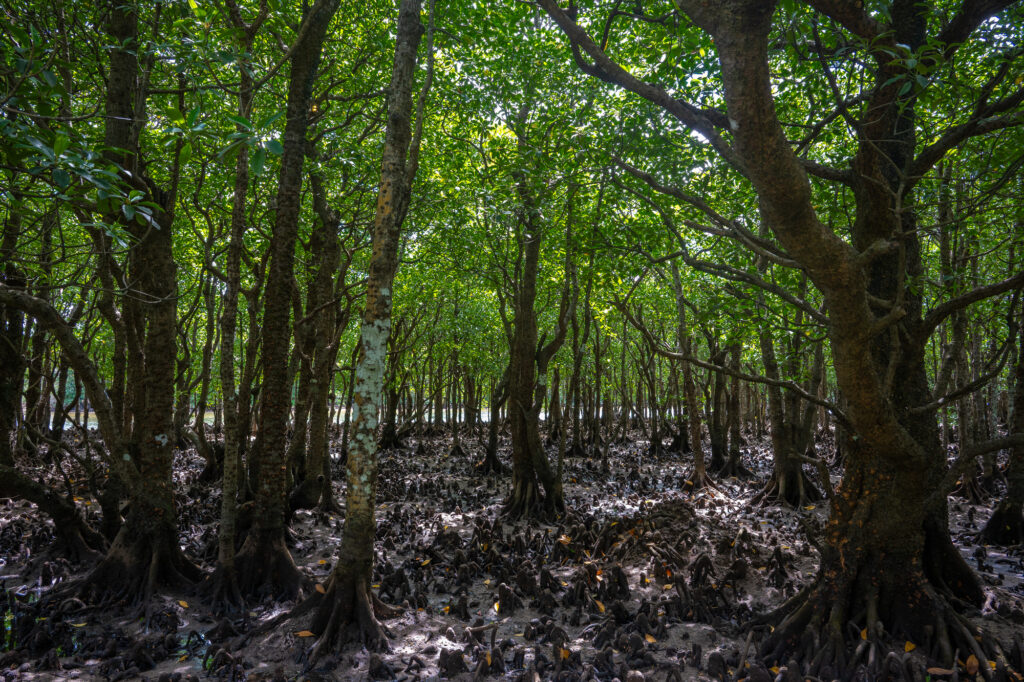
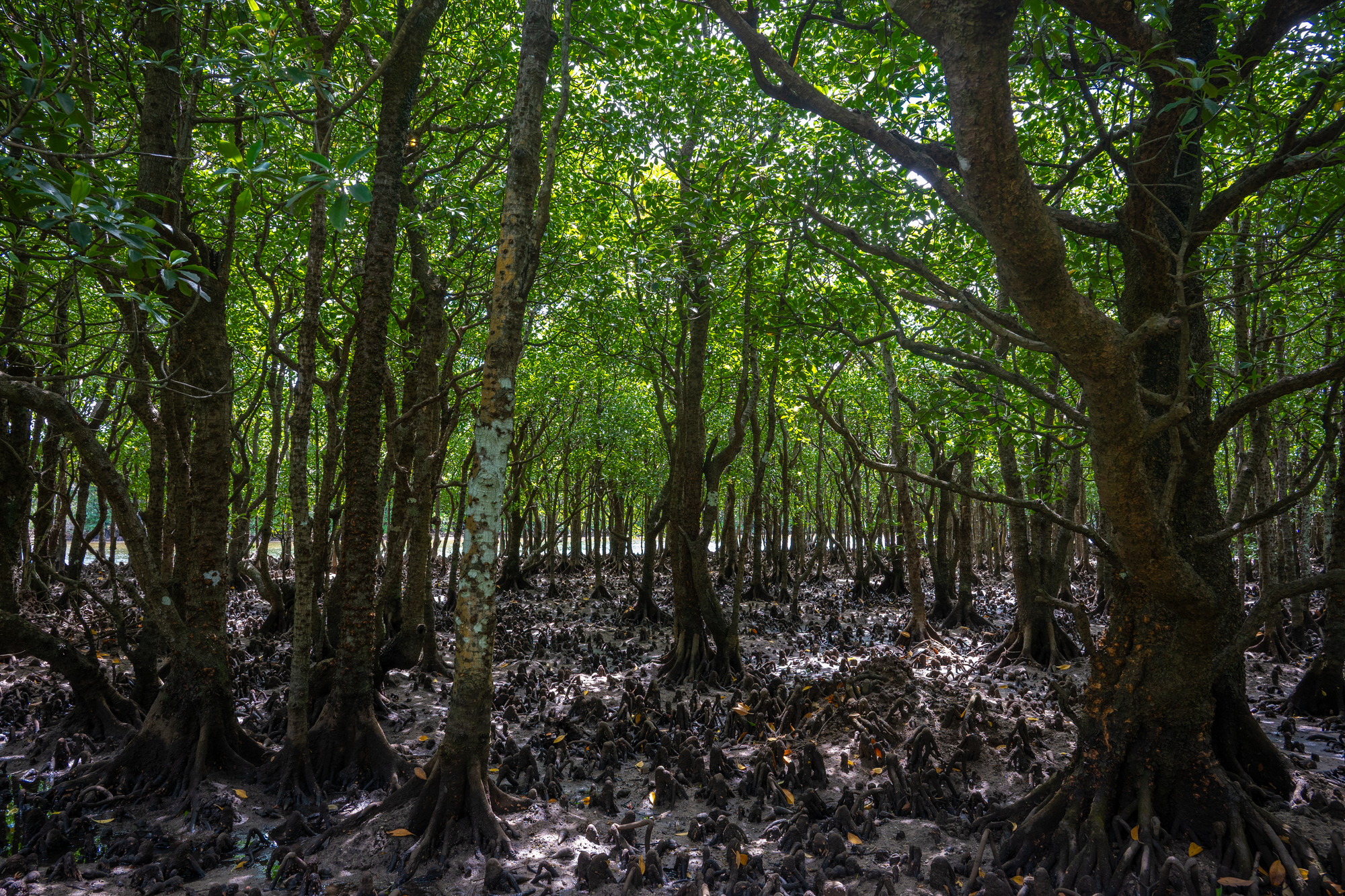
An island’s-largest-class mangrove forest
At Nagura Anparu, an island’s-largest-class mangrove forest spreads. Often lumped together as “mangrove,” it’s actually a collective name for several kinds of plants. At Nagura Anparu, the following 5 kinds can be observed.
- Ohirugi (black mangrove): knee-like breathing roots are the feature
- Yaeyama-hirugi (red mangrove): octopus-leg-like prop roots are impressive
- Mehirugi (Kandelia): known as Japan’s northernmost mangrove too
- Hirugi-modoki: shrubby and short
- Hirugi-damashi (grey mangrove): breathing roots stand in a grove from the ground
- Mayapushiki (mangrove apple): a tall mangrove
Being able to observe this diverse a range of mangroves in one area is extremely rare even in Japan. You could call it a place like a “mangrove plant encyclopedia.”
A crab paradise | the varied crustaceans seen on the tidal flat
Speaking of Nagura Anparu, crabs. On the tidal flat after the tide goes out, crabs of various shapes show their faces all at once. So familiar to people that there’s even a local folk song “Amibaru-nu Midagaama yunta,” they’re a presence long beloved.
| Crab type | Features |
|---|---|
| Fiddler crab | Only one of the male’s claws is large. Famous for its courtship dance |
| Red-jointed fiddler crab | The red claw is vivid |
| Okinawa milky fiddler crab | The white fan-like claw is elegant |
| Sand-bubbler crab | An adorable figure eating sand to make balls |
| Soldier crab | An overwhelming sight of swarms covering the tidal flat |
| Reed crab | A resident of the mangrove forest |
| Yaeyama mountain crab | A region-endemic rare species |
The “swarm of soldier crabs” covering the whole tidal flat with crabs is Nagura Anparu’s byword. Watching the dance of crabs across the whole surface, there’s an emotion such that you forget the time.
Rare crustaceans / endemic species inhabit
Beyond crabs, a treasure house of rare species—region-endemic shrimp like the Ishigaki marsh shrimp and Kotsuno marsh shrimp, being the northern limit of the mangrove marsh shrimp too. A sacred place of nature observation indeed, with not a few creatures “seen only here in Japan.”
A birding ground over 200 wild-bird species visit
Nagura Anparu is known as a birding ground that the most kinds of wild birds within Okinawa Prefecture visit. About 200 wild-bird species are recorded, and it functions especially as an important stopover and wintering site for migratory birds too. For bird-watching enthusiasts, it’s a place of longing.
- Crested serpent eagle: a Special Natural Monument. The apex of Anparu’s ecosystem
- Ruddy kingfisher: an April–August summer bird. A vividly red migratory bird
- Black-winged stilt: a stilt featuring long red legs
- Black-faced spoonbill: an endangered wintering bird
- Common redshank: a representative of the sandpiper/plover kind
- Herons: little egret, grey heron, etc.
Crested serpent eagle | Anparu’s star
The crested serpent eagle is Nagura Anparu’s king. A globally rare raptor that lives as a resident bird only on Iriomote and Ishigaki islands in Japan. With a total length of 55 cm, about the size of a common buzzard, it mainly preys on snakes, but at Anparu it has a diverse diet, eating the abundant crabs too. It’s a presence standing at the apex of Anparu’s ecosystem.
If you’re lucky, you may meet the figure flying serenely over the mangrove forest. The emotion when you do meet it is exceptional.
The yellow-margined box turtle inhabits too
Deep in the mangrove forest, the Natural Monument yellow-margined box turtle inhabits too. An endemic species of the Yaeyama Islands, it’s a rare turtle that can completely close its shell when it senses danger. Observe carefully and you may meet its rare figure.
Nagura Bay’s Superb View | Ishigaki’s Most Beautiful Sunset
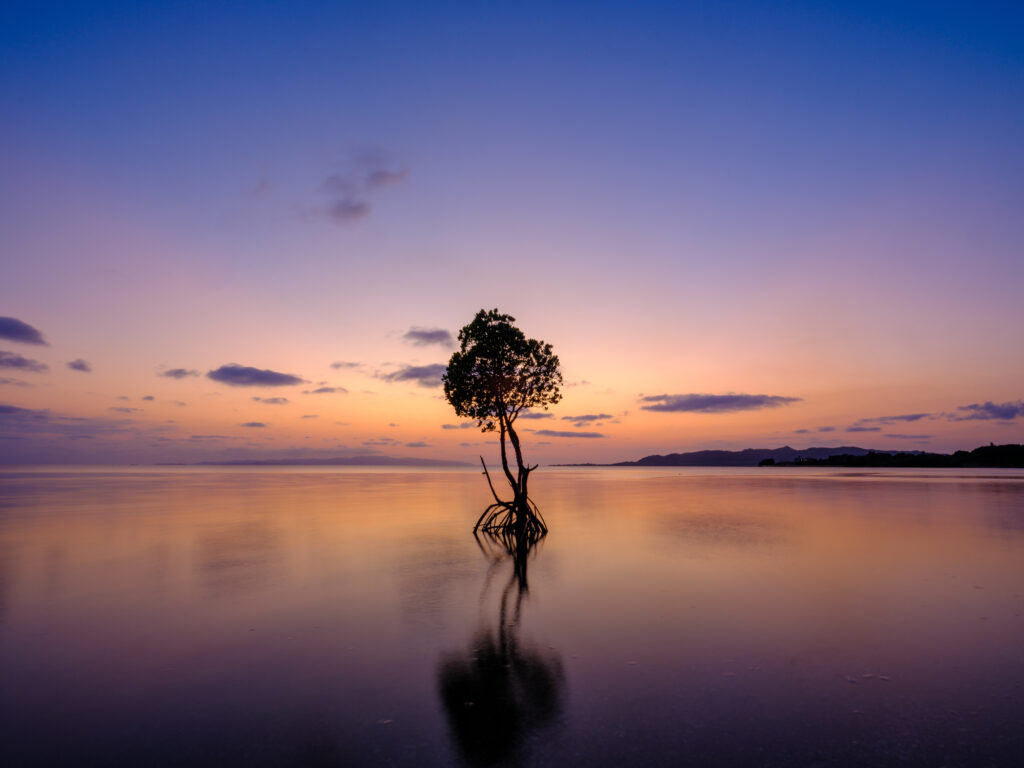
“Ishigaki’s No. 1 sunset spot”
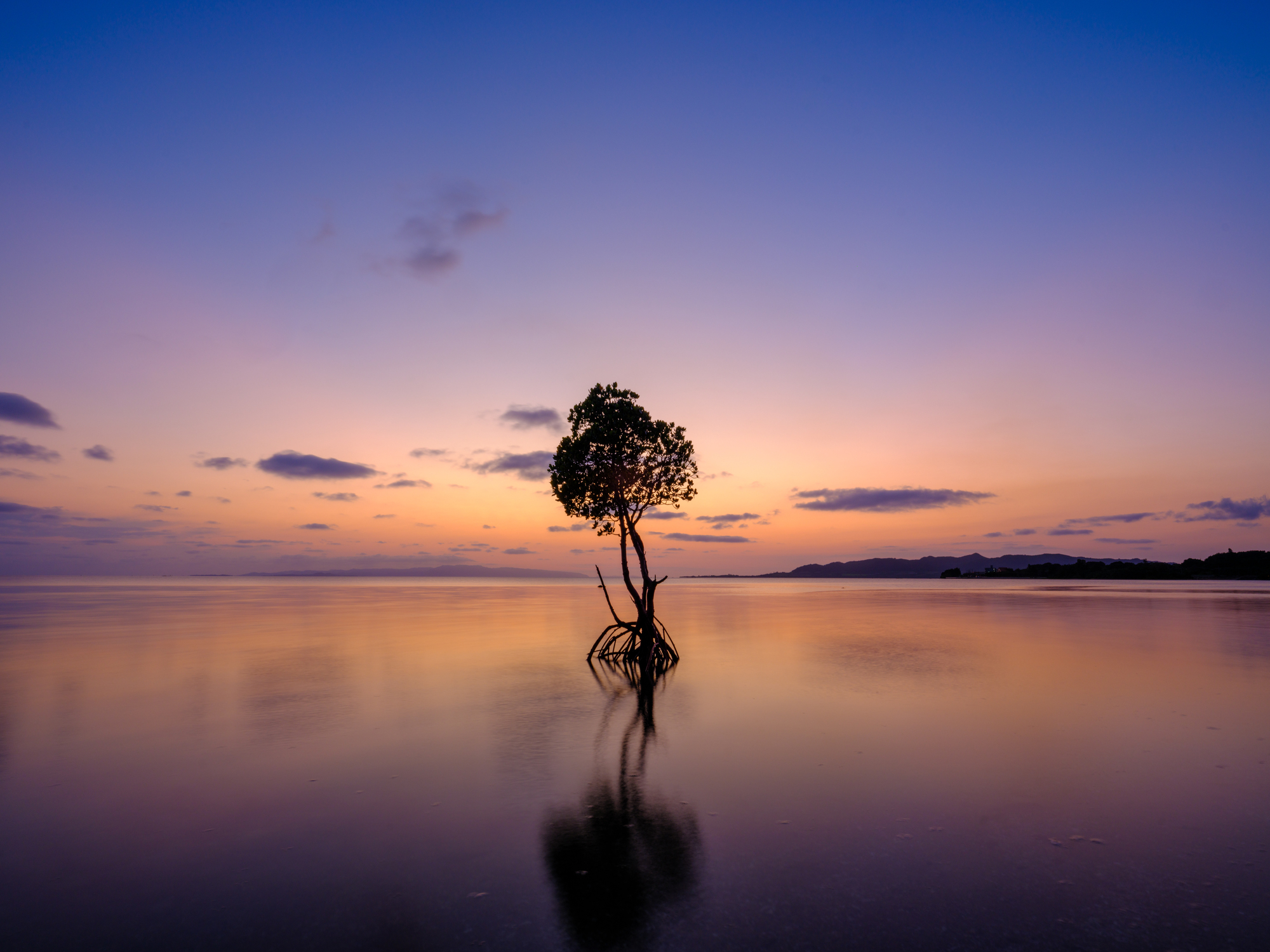
Nagura Bay is said to be the spot where Ishigaki’s most beautiful sunset can be seen. The sight of the sunset reflecting on the wide bay’s water surface and the whole sky dyeing as if ablaze is an overwhelming beauty that fascinates not only tourists but local camera enthusiasts too.
Since the bay itself opens west toward the East China Sea, you can observe the sun sinking into the horizon with nothing blocking it. Arriving 30–40 minutes before sunset and enjoying the process of the sky’s colors changing dramatically from start to finish is recommended.
The SNS-buzzing “single mangrove”
Speaking of Nagura Bay’s sunset spot, the “single mangrove.” A superb-view point where a mangrove (hirugi) growing all alone, apart, on Nagura Bay’s tidal flat draws a fantastical silhouette against the sunset.
A popular spot that caught fire on SNS, the evening time slot bustles with camera enthusiasts. There’s parking space for about 3 cars, but it’s not rare for it to fill up. Arriving early is the iron rule.
The view from Nagura Great Bridge is a superb view too
Nagura Great Bridge spanning Nagura Bay is a superb-view point where you can survey the vast wetland and sea from atop the bridge at a glance. At the foot of the bridge there’s a free parking lot, ideal for a drive break too. From atop the bridge you can survey the full view of the mangrove forest, and observe the bay’s state changing with the tide’s ebb and flow carefully.
How to Enjoy Nagura Anparu | Four Ways to Spend the Time
1. Creature observation on the tidal flat
Nagura Anparu’s biggest enjoyment is creature observation on the tidal flat. The low-tide time when the tidal flat spreads is the recommended time slot. The fiddler crab’s courtship dance, the sand-bubbler crab’s ball-making, the swarm of soldier crabs—both adults and children get absorbed in the drama of little creatures unfolding before their eyes.
2. Hermit-crab observation and shell-collecting along the sea
Walk along the sandbar and you can enjoy hermit-crab observation and shell-collecting too. However, since it’s a Ramsar Convention registered site, taking home creatures/plants is NG. Keep to observation/shooting only.
3. See Nagura Bay’s beautiful sunset
The evening is the golden time for sunset viewing at Nagura Bay. The single mangrove, Nagura Great Bridge, the coastline—find your favorite position and savor the painting-like sunset.
4. Gaze leisurely at the sea under Nagura Great Bridge
Under Nagura Great Bridge is a quiet place perfect for a drive break, reading, or meditation too. A hidden gem with few tourists where you can spend time leisurely.
Nagura Bay / Nagura Anparu Basic Information
| Item | Details |
|---|---|
| Location | Nagura, Ishigaki City, Okinawa |
| Hours | Free to view |
| Closed | None |
| Admission | Free |
| Parking | Free lot at the foot of Nagura Great Bridge (about 10 cars) / 3 near the single mangrove |
| Restrooms | None (use Ishigaki Yaima Village, etc.) |
| Time needed | 30 min–2 hours (depending on how you enjoy it) |
| Mangrove area | About 62 ha |
| Tidal-flat area | About 20 ha |
| Wetland-grassland area | About 49 ha |
| Promenade | Connects from Ishigaki Yaima Village |
Access to Nagura Bay / Nagura Anparu
| Departure point | Time needed | Route |
|---|---|---|
| New Ishigaki Airport | About 25 min by car | National Route 390 → via town to Pref. Route 79 |
| Ishigaki Port Remote-Island Terminal | About 15–20 min by car | North on Pref. Route 79 (Ishigaki Port–Ibaruma line) from town |
| Kabira Bay | About 15 min by car | Ideal for set sightseeing |
| Tojin Baka / Kannonzaki | About 10 min by car | A nearby spot |
Access by rental car is convenient
For Nagura Bay / Nagura Anparu, access by rental car is overwhelmingly convenient. Along Pref. Route 79 are Nagura Great Bridge and Ishigaki Yaima Village, which become the landmark. Head north along the sea from town and you’ll naturally reach the Nagura Bay area.
Accessible by local bus too
By local bus, ride the Route 9 “Kabira Resort Line” from the Ishigaki bus terminal and get off at “Yaima-mura Iriguchi (Village Entrance).” It’s about a 3-minute walk to arrive. Since it runs at a pace of one per 1–3 hours, combining it methodically lets you visit by public transport too.
Cautions and Things to Bring When Visiting Nagura Anparu
Things-to-bring list
- Drinks: essential since there are almost no vending machines around
- Sturdy get-wet-OK shoes: needed if walking the tidal flat. Beach sandals are dangerous on rocks
- Binoculars: an essential item for wild-bird observation
- A 2-liter PET bottle of water: for washing hands and feet after strolling
- Insect-repellent spray: the mangrove forest has many mosquitoes
- Sunscreen: there’s little shade
- Hat: protect from the strong sunshine
- Camera / telephoto lens: for shooting wild birds and creatures
Visit aiming for the low-tide time slot
Nagura Anparu’s enjoyment is maximized at the low-tide time slot. Visit aiming for the time when the tide goes out and the tidal flat spreads. Check the tide table (tide graph) in advance. Conversely, for sunset viewing, at the high-tide-to-ebb timing the scenery of the sunset reflecting on the water surface becomes beautiful.
Strictly observe the nature-protection rules
Since it’s a Ramsar Convention registered wetland, collecting creatures/plants is strictly prohibited. Crabs, shells, plants—all are in principle “only look / only shoot.”
- Don’t catch / don’t take home crabs and little creatures
- Don’t break mangrove leaves or branches
- Don’t step on creatures’ dwellings (holes) on the tidal flat
- Take home every bit of trash, leaving none
- Don’t be loud (wild birds flee)
- Don’t stray from the promenade (to protect wetland grassland and breeding sites)
Vehicle entry / smoking prohibited
Vehicle entry onto the sand beach or tidal flat is strictly prohibited. From both the “damaging the landscape” and “damage to the ecosystem” angles, absolutely refrain. Smoking is also prohibited outside designated places. Observe manners and make a Nagura Anparu that can be left for the next generation too.
Nearby Spots to Enjoy Together with Nagura Anparu
Ishigaki Yaima Village | a Yaeyama traditional-culture experience
Ishigaki Yaima Village, right next to Nagura Anparu, is a culture-experience facility that relocated and restored Yaeyama’s traditional old folk houses. Walk the mangrove promenade and you can observe Nagura Anparu’s mangrove forest up close. Content the family can enjoy, like shisa making and a squirrel-monkey garden, is extensive too.
Tojin Baka | a memorial grave of history and superb view
Tojin Baka, about 10 minutes by car from Nagura Anparu, is a vividly colored Chinese-style memorial grave. A sightseeing site unique to Ishigaki where you can learn Kannonzaki’s superb view and the history of the Robert Bowne incident.
Uganzaki | Ishigaki’s westernmost lighthouse
Going a little further, about 15 minutes by car, Ishigaki’s westernmost Uganzaki. A spot famous for the superb view of a pure-white lighthouse and sheer cliffs, and clusters of Easter lilies in spring. The sunset is in a class of its own too.
Kabira Bay | a Michelin three-star superb view
About 15 minutes by car from Nagura Anparu, Kabira Bay is Ishigaki’s greatest superb-view spot that earned three stars in the Michelin Green Guide. You can enjoy the Kabira Blue sea by glass boat.
Recommended Model Courses for Nagura Anparu Sightseeing
Nature observation / tidal-flat strolling | half-day course
- 10:00 Arrive at Nagura Anparu to match the low-tide time
- 10:15 Gaze at the full view from Nagura Great Bridge
- 10:30 Crab observation on the tidal flat, viewing the fiddler crab’s dance
- 11:30 Stroll Ishigaki Yaima Village’s mangrove promenade
- 12:30 Lunch & a break at Yaima Village
Sunset viewing | evening course
- 16:00 Tojin Baka sightseeing
- 17:00 Arrive at Nagura Anparu, a light stroll
- 17:30 Take a spot at the single mangrove
- 18:00–18:30 Sunset viewing (time varies by season)
- 19:00 Savor it until magic hour
Nagura Anparu FAQ
Can I enjoy it with kids?
Yes, it’s the best place for children’s nature observation. They can get absorbed in the little world before their eyes—crabs, hermit crabs, shells—a perfect opportunity to nurture interest in creatures. However, since the tidal flat is slippery and there are rocks too, sturdy get-wet-OK shoes and guardian accompaniment are essential.
How long does it take?
For a light stroll, 30 minutes–1 hour; for careful creature observation or bird-watching, 2–3 hours; including sunset viewing, half a day. Build the time flexibly by purpose.
Can I enjoy SUP and kayak too?
At Nagura Bay, activities like SUP and kayak are popular too. The mangrove forest viewed from the sea has a power different again from the land. Since local shops hold various tours, if interested, look into it.
Can I see Anparu at night too?
Since the road is dark and dangerous at night, individual nighttime visits aren’t recommended. If you want to observe nocturnal creatures, joining a guided night tour is safe.
What’s the best spot for sunset viewing?
The SNS-popular single mangrove is best. Taking a spot early is the iron rule. The view from atop Nagura Great Bridge is hard to pass up too, and you can access it casually on foot from the parking lot at the foot of the bridge.
What time slot do crabs become active?
The low-tide time slot when the tide goes out is most active. The figure of a male fiddler crab waving its claw in courtship can be observed at this time too. The morning to late morning when the temperature isn’t too high is best for observation.
Summary | Experience Japan’s Southernmost Ramsar Wetland at Nagura Bay / Nagura Anparu
Nagura Bay / Nagura Anparu is a precious wetland, Japan’s southernmost, registered under the Ramsar Convention in 2005. About 62 ha of vast mangrove forest, about 20 ha of tidal flat, over 200 wild-bird species, varied crabs like the fiddler crab and sand-bubbler crab, even the Special Natural Monument crested serpent eagle—it’s Ishigaki’s treasure, packed tight with a subtropical, miraculous ecosystem.
The good access of about 25 minutes by car from New Ishigaki Airport, about 15–20 minutes from Ishigaki Port. With free admission and free parking, you can visit casually. With abundant ways to enjoy it—tidal-flat creature observation, bird-watching, sunset viewing, SUP—it’s a spot you’ll want to visit again and again.
Precisely because it’s a special place, a Ramsar Convention wetland, an attitude that respects nature is required of visitors too. “Look, feel, shoot” is the principle. On your next Ishigaki trip, be sure to touch nature’s figure just as it is. Surely you’ll meet another appeal of Ishigaki, different from the sea.
Book Your Rental Car Here


※For pick-ups or returns outside of business hours, please contact us by phone.
Access
Ishigaki Island Mirais Rent a Car Ishigaki Airport Branch
783-1 Shiraho, Ishigaki City, Okinawa 907-0242, Japan
*The address above shows a wide area. For the exact location, please click “View larger map” or “Open in Google Maps.”
Ishigaki Island Mirais Rent a Car Ishigaki Downtown Branch
704 Tonoshiro, Ishigaki City, Okinawa 907-0004, Japan
*The address above shows a wide area. For the exact location, please click “View larger map” or “Open in Google Maps.”
