
Shiraho Coast | Ishigaki, One of the Northern Hemisphere's Largest Blue-Coral Colonies, Snorkeling
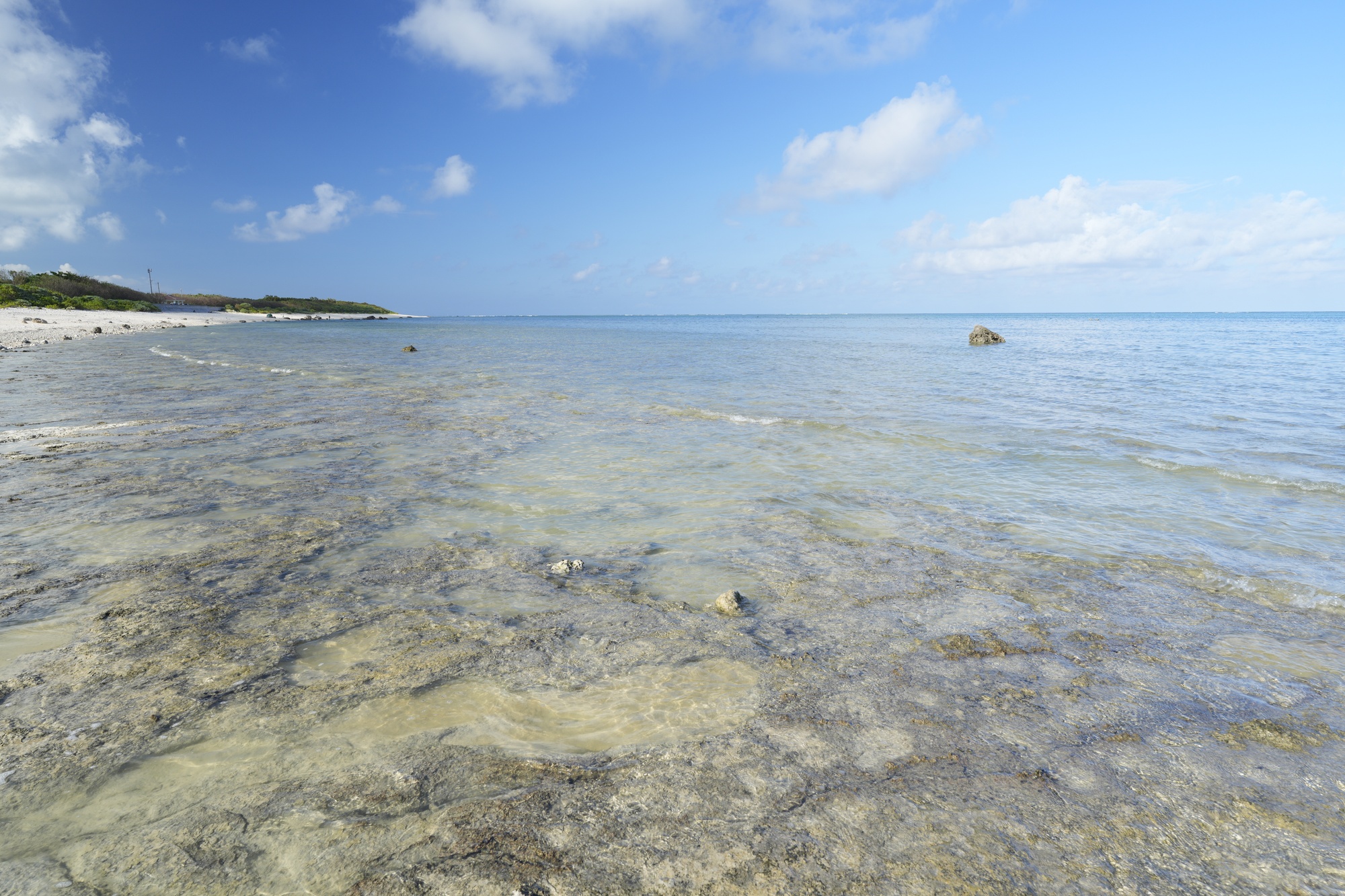
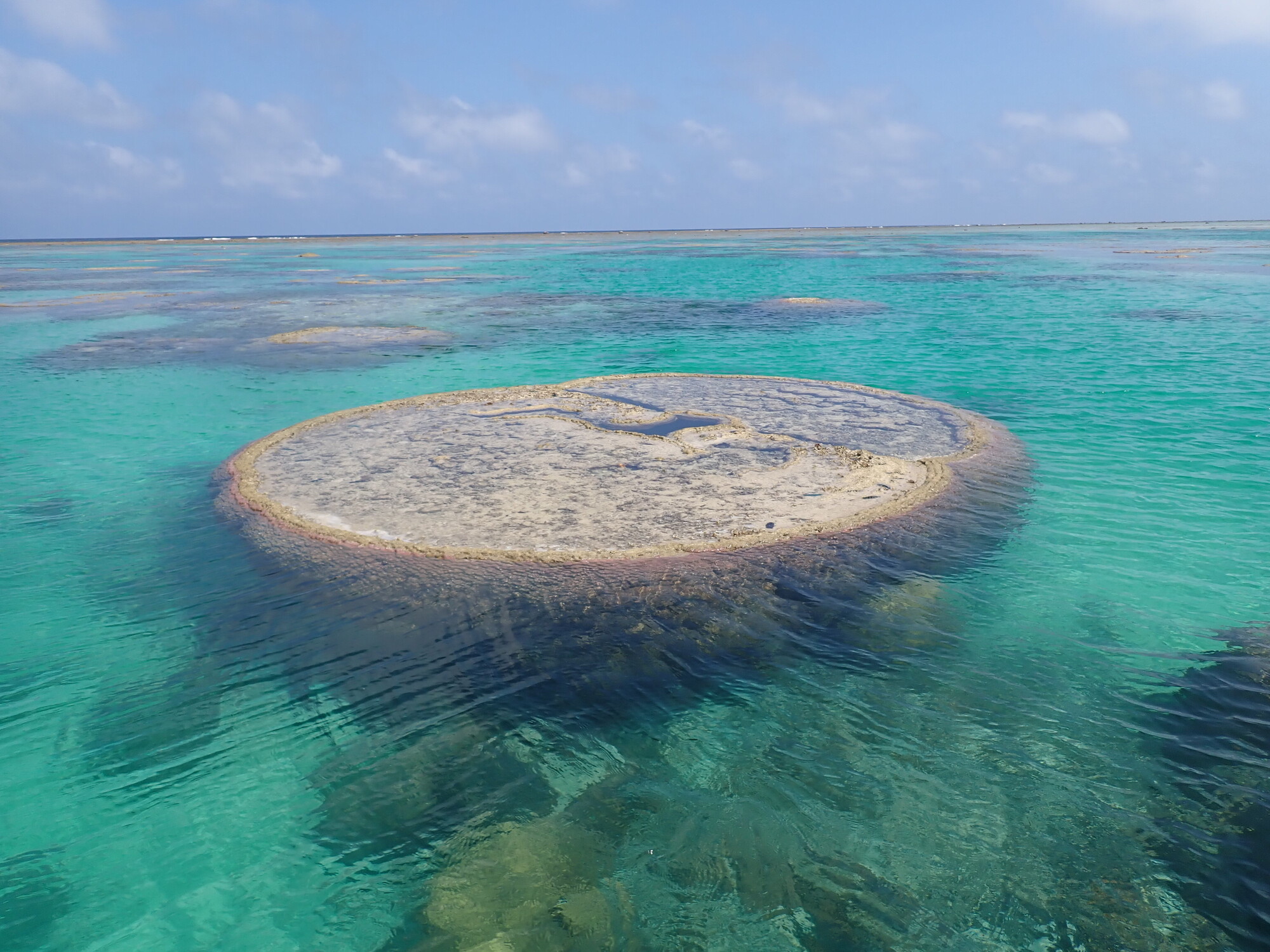
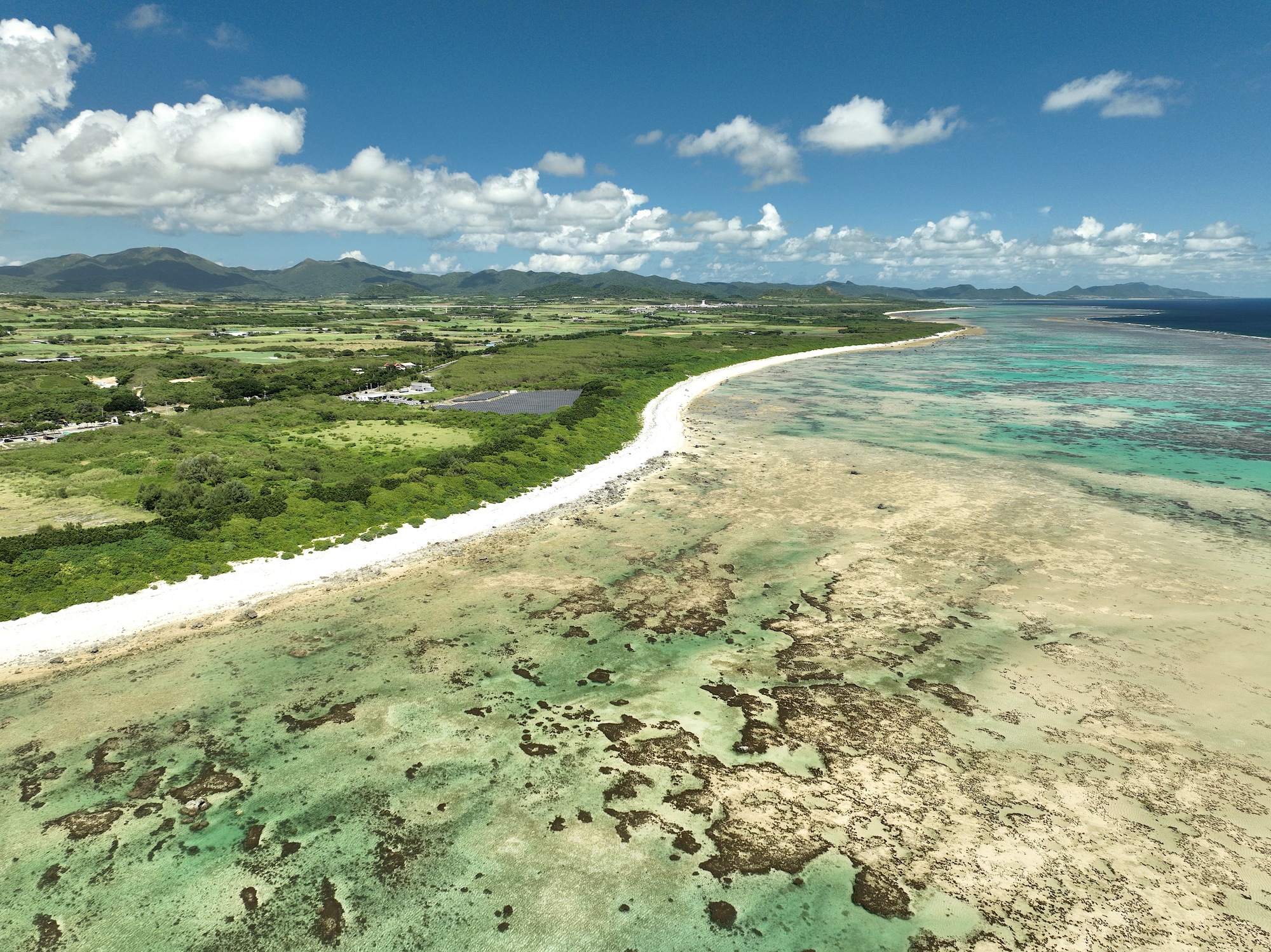
On Ishigaki’s southeast, a long white-sand beach spreading over about 10 km. That is Shiraho Coast. In the coral reef spreading about 1 km offshore lies—of all things—a blue coral colony of the Northern Hemisphere’s largest class. A sea academically extremely precious too, visited by researchers and divers from around the world. Further, on the land side a red-tiled village and a traditional boat landing remain, and the air of Yaeyama-like living still breathes here today.
The slightly unique thing about Shiraho Coast is that it’s said “if you just look at the scenery, the appeal is halved.” The blue coral can’t be seen by beach entry; accessing it by boat tour is the standard route. In this article, we’ll thoroughly explain Shiraho Coast’s appeal, how to enjoy the blue coral, the highlights of the traditional village, parking and access information, and cautions.
What Kind of Place Is Shiraho Coast? A Sacred Sea Spreading in Southeastern Ishigaki
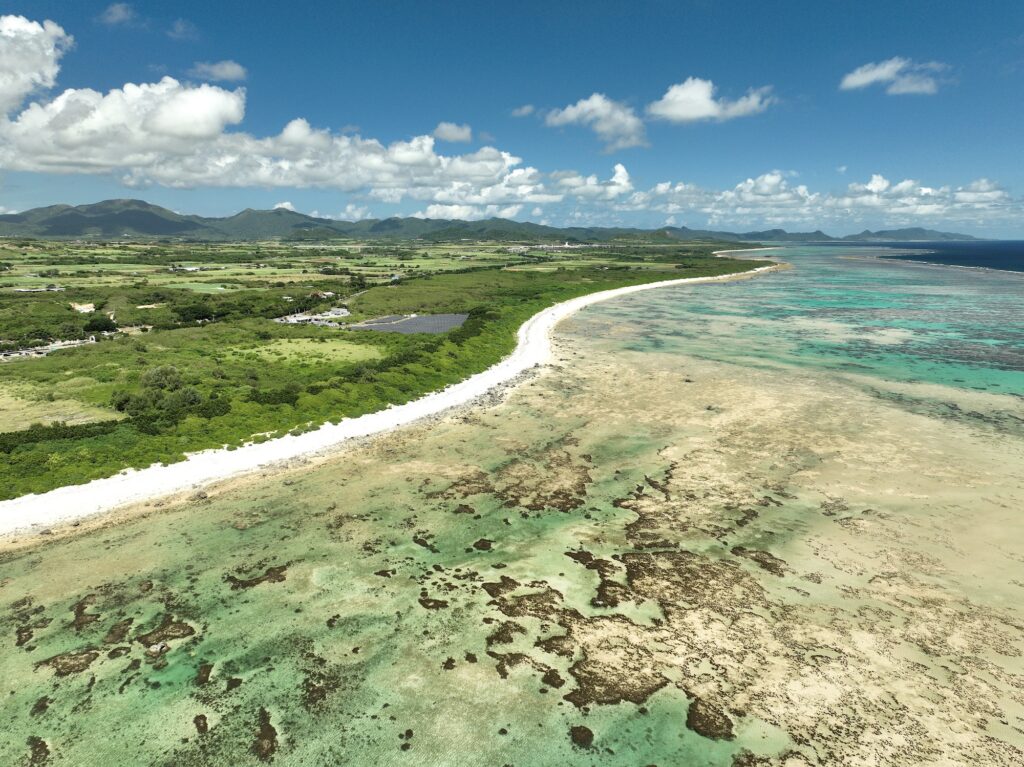
Shiraho Coast is the coastline of the Shiraho district in southeastern Ishigaki. Just about 5–10 minutes by car from New Ishigaki Airport—outstanding access. And yet it’s a special place away from the town’s hustle, where untouched nature and traditional culture still remain strongly to this day.
There’s a reason locals call this sea the “treasure of the sea (umi-no-takara).” In the coral-reef zone spanning about 10 km, a globally rare blue coral colony spreads out, and over 120 kinds of coral and over 300 kinds of fish coexist. A miracle-like ecosystem that escaped crown-of-thorns-starfish damage and red-soil runoff remains here.
Designated the “Marine Park Zone” of Iriomote-Ishigaki National Park
The Shiraho coral reef was incorporated into Iriomote-Ishigaki National Park in 2007, and to protect the precious nature, it’s designated as a “Marine Park Zone.” This is one of the four major protected areas on Ishigaki, alongside Hirakubo, Kabira and Yonehara. Taking creatures is of course prohibited, as are the use of harpoons or spearguns, and BBQ or smoking on the shore.
When Shiraho Coast came up as a candidate site for New Ishigaki Airport in the late 1970s, a citizens’ movement arose to protect the coral, and in the end the airport was built elsewhere. The history of local, national and global people joining hands to protect this sea through to the end is an important backdrop of Shiraho Coast too.
A long white-sand beach spanning 10 km
Shiraho Coast’s sand beach is a natural long beach with no artificial hand at all. White sand and blue sea continue for about 10 km, and because it opens to the east, it’s popular as a superb-view spot for viewing the sunrise or moonrise too. It’s also known that, with the right conditions, you can take mirror-surface photos like “Salar de Uyuni.”
On the sand beach, a “heart-shaped object” made of large bleached coral is quietly placed, secretly popular as an SNS-worthy photo spot too. It’s also said to have been made by windsurfing enthusiasts as a landmark, but whether you can find it is up to you.
Shiraho Coast’s Biggest Appeal | A Globally Precious Blue Coral Colony
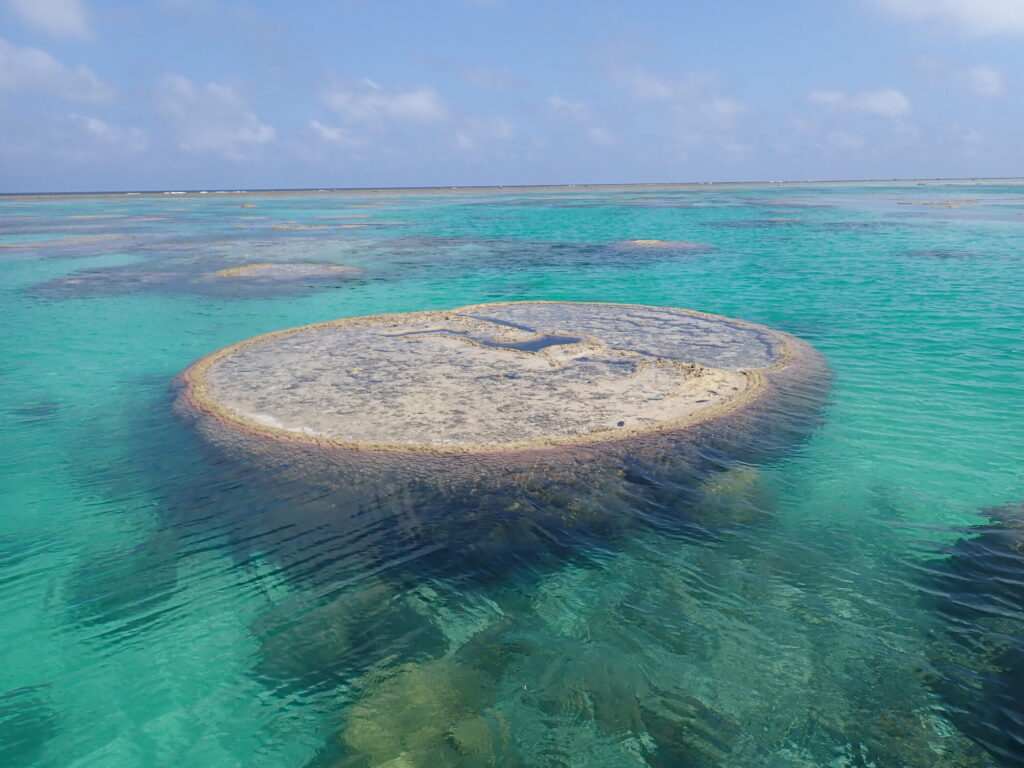
Speaking of Shiraho Coast’s signature, it’s the “blue coral colony.” This colony, said to be the Northern Hemisphere’s largest class and oldest, is so different in scale that some single colonies exceed 10 m in size. For diving enthusiasts and snorkelers, it’s truly a point of longing.
“Blue coral” actually doesn’t look blue!?
From the name’s image, many expect “an underwater world where blue coral spreads,” but in fact blue coral’s appearance is brownish. So why is it called “blue”? The answer is that the coral’s skeleton (cross-section) is blue. That the hard bone nurtured in limestone is a beautiful blue is the origin of the name.
Observing underwater while snorkeling or diving, a broken cross-section can be seen glowing blue, and veterans can tell at a glance it’s blue coral. The gap of “blue coral that doesn’t look blue” is fun unique to Shiraho Coast too.
Over 120 kinds of coral and over 300 kinds of fish
In Shiraho Coast’s underwater world, not only blue coral but a wide variety of marine creatures inhabit.
| Kind | Features |
|---|---|
| Blue coral | Northern Hemisphere’s largest class. Giant colonies over 10 m too. Globally rare |
| Porites coral | Grows in giant masses. Some individuals are said to be the oldest |
| Finger Porites coral | A coral cluster extending in branch shapes |
| Microatoll | A disk-shaped coral with a distinctive form |
| Sapphire damselfish / clownfish | Representative players of colorful tropical fish. Hugely popular with kids too |
A coral-reef ecosystem boasting one of the world’s leading scales, with over 70 species in 30 genera of reef-building coral densely packed. Just peering in from the sea surface while snorkeling, the transparency is such that you can clearly see the coral’s hues with the naked eye. Even seen from above the surface, it’s beautiful enough to be called “Ryugu-jo (the Dragon Palace).”
Individual beach entry is, in principle, not allowed
“To see the blue coral at Shiraho Coast, can I just swim from the beach?”—a common question, but the answer is “no.” There are two reasons.
- The coral colony is 1 km offshore, and swimming there on your own isn’t realistic (the issue of current, the issue of stamina)
- At Shiraho Coast, swimming by beach entry is entirely prohibited for coral conservation. Sea bathing isn’t permitted either
In other words, to enjoy Shiraho’s coral, joining a boat snorkeling tour or diving tour is essential. Much of the “Shiraho Coast was a disappointment” review comes from those who didn’t join a tour and went home having only gazed at the beach. Conversely, if you join a tour, it’s a sea where a moving underwater world is guaranteed.
Shiraho Coast’s Traditional Culture and Village Highlights
Shiraho Coast’s appeal isn’t only the sea. The Shiraho village spreading on the land side is an area where Yaeyama’s traditional culture and living still remain strongly. Red-tile roofs reminiscent of Taketomi Island’s village rows dot the area, and the wisdom of people living with the sea breathes everywhere.
A traditional boat landing surrounded by large rocks
One of Shiraho Coast’s features is the traditional boat landing used by local fishermen. The handmade-feeling harbor enclosed by large rocks is a precious landscape rarely seen at other beaches. Snorkeling-tour boats also depart from here at high tide.
Right beside the boat landing, by the goodwill of local fishermen, a hose-fitted faucet is set up. With Shiraho Coast having no shower facilities, it’s for people who’ve come out of the sea to rinse their bodies. Beside it is a donation box, so users can donate as water charges out of goodwill. It’s a place where the warm relationship between locals and visitors can be glimpsed.
Strolling the red-tile-roof and stone-wall village
Walking through Shiraho village, Yaeyama-like scenery appears one after another—red-tile roofs, coral stone walls, fukugi tree rows, shisa. With abundant designated cultural properties too, it’s popular with tourists as a “village fun to walk,” where you can feel traditional architecture and culture.
In the village, road-guide signs numbered 1 to 40 are set up. These are a symbol of the district that also serve as landmarks for sightseeing guidance. There’s also a custom of exchanging locations by number, like “A-19,” and when you ask a local for directions they may tell you with this number.
Learn about coral conservation at “Shiraho Sango Mura”
The WWF Coral Reef Conservation Center “Shiraho Sango Mura” within Shiraho village is a facility introducing the Shiraho coral reef’s ecosystem and conservation activities. You can learn basic knowledge of blue coral, the coral-bleaching problem, the connection between the local community and nature, and more. Dropping by before snorkeling lets the underwater world move you more deeply. Admission is free, and there’s a parking lot too, so it’s convenient as an alternative when the beachfront lot is full.
Access to Shiraho Coast and Parking Information
| Departure point | Time needed | Route |
|---|---|---|
| New Ishigaki Airport | About 5–10 min by car | South on National Route 390, toward the sea side at Shiraho village |
| Ishigaki Port Remote-Island Terminal | About 25 min by car | East on National Route 390 from town |
| Town | About 25–30 min by local bus | Get off at “Shiraho” bus stop, about 5 min on foot |
Parking, restrooms and facility information
- Free parking: maintained in front of the rest area. A wheelchair-only parking space available
- Another free lot: a gravel plaza just before the coast, ahead down the side road by A-19
- Shiraho Sango Mura parking: usable as a set with a facility tour
- Restrooms: maintained (including multipurpose restroom)
- Rest area: yes
- Shower: none on the coast. The fishermen’s hose faucet is for emergency use
- Eateries / vending machines: several in the village
There are narrow-road areas too, so caution is needed for passing oncoming cars. At crowded times, cars parked on the street are seen, but so as not to inconvenience nearby residents, always use a parking lot.
Snorkeling Tours to Enjoy Shiraho Coast
To savor Shiraho Coast’s appeal to the fullest, joining a boat snorkeling tour is best. A local captain takes you to the blue coral colony’s best point by a dedicated boat, so even beginners can safely enjoy a World-Heritage-class sea.
Features of Shiraho snorkeling tours
- To the offshore point by boat: no need to walk to the coral or swim long distances
- Safe with a guide: a captain or experienced person who knows Shiraho’s sea well accompanies you
- Beginner-OK: equipment rental and a lecture on how to use it provided
- Fee guide: about ¥5,000–6,000 for adults, ¥4,000–5,000 for children on a half-day tour
- Varied points such as Porites coral and clownfish: one tour guides you to multiple highlights
Many local guesthouses and individual shops hold tours, and in many cases you can join only the tour even if you’re not a lodger. Since advance booking is the rule, once your visit date is set, it’s recommended to contact them early.
Cautions When Visiting Shiraho Coast
Strictly observe the rules for coral protection
Shiraho Coast has strict rules for coral conservation.
- Taking creatures—coral, fish, shells, sea urchins, etc.—is entirely prohibited
- Using harpoons / spearguns is prohibited
- BBQ / smoking is not allowed on the coast
- Swimming / sea bathing by beach entry is entirely prohibited
These are promises for “leaving the miracle coral reef to the next generation.” Visiting while observing the rules becomes the greatest expression of gratitude.
There’s no shower, so prepare in advance
Shiraho Coast has almost no public sea-bathing shower facilities. When using a tour, you can often borrow a shower at the shop, but for free viewing, anticipate changing clothes and showering at your lodging or a nearby facility. Prepare thoroughly—a bath towel, a zip-lock bag, a change of clothes, etc.
Nearby Spots to Tour as a Set with Shiraho Coast
New Ishigaki Airport / airport surroundings
Shiraho Coast is just 5–10 minutes by car from New Ishigaki Airport. The location easy to incorporate into your arrival-day or departure-day schedule is a major merit. It’s also recommended to drop by right after renting a car at the airport, or to make it the last sightseeing before returning the car at the airport.
Ishigaki Yaima Village
About 20 minutes by car from Shiraho toward town is “Ishigaki Yaima Village,” where you can experience Yaeyama’s traditional culture. A facility where you can dig deeper into the Yaeyama culture you tasted at Shiraho village—old folk houses, shisa-making, a squirrel-monkey park and more.
Tamatorizaki Observation Deck / Hirakubozaki
After visiting Shiraho Coast, heading north brings you to northern Ishigaki’s superb-view spots like Tamatorizaki Observation Deck and Hirakubozaki Lighthouse. A plan to enjoy a drive crossing Ishigaki’s east coast over a full day is recommended too.
Shiraho Coast FAQ
How long does Shiraho Coast take?
With a snorkeling-tour participation, 3–4 hours (half-day tour); for village strolling and coast viewing only, 1–2 hours is the guide. If you set a tour and village strolling together, you can enjoy a full half day.
Can I enjoy it with kids?
Many snorkeling-tour shops are OK from age 5, and family participation is popular too. Confirming the age limit, water depth and life-jacket availability with the shop in advance is reassuring. Village strolling and sand-beach play can be enjoyed regardless of age.
When’s the best season?
For snorkeling, May–October is best in both water temperature and sea conditions. In winter the sea can be rough with the north wind, but many shops run tours year-round. The blue coral’s spawning period (summer evenings) is a special season for researchers.
Can I swim independently?
In principle, no. Swimming by beach entry is prohibited, and the distance to the coral is too far, so it’s dangerous. Be sure to join a tour.
Summary | Touch a Globally Precious Coral Reef and Traditional Culture at Shiraho Coast
Shiraho Coast is a globally precious sea where the Northern Hemisphere’s largest-class blue coral colony, over 120 kinds of coral and over 300 kinds of fish live. A 10-km natural long beach, a red-tiled village, a traditional boat landing, the Sango Mura learning facility—you can experience Yaeyama’s appeal on both sea and land.
The good access of just 5–10 minutes by car from New Ishigaki Airport is a point not to be overlooked either. To enjoy the blue coral, a boat snorkeling tour is essential, but in return, it’s a sea where a moving underwater world is guaranteed.
Visiting while observing the coral-conservation rules and paying respect to the local traditional culture—that’s the trick to enjoying Shiraho Coast to the fullest. At a coral-reef sea you could call a treasure of the world, make an unforgettable Ishigaki memory.
Book Your Rental Car Here


※For pick-ups or returns outside of business hours, please contact us by phone.
Access
Ishigaki Island Mirais Rent a Car Ishigaki Airport Branch
783-1 Shiraho, Ishigaki City, Okinawa 907-0242, Japan
*The address above shows a wide area. For the exact location, please click “View larger map” or “Open in Google Maps.”
Ishigaki Island Mirais Rent a Car Ishigaki Downtown Branch
704 Tonoshiro, Ishigaki City, Okinawa 907-0004, Japan
*The address above shows a wide area. For the exact location, please click “View larger map” or “Open in Google Maps.”
