
Yonehara Beach | Ishigaki Snorkeling & Coral Reef Complete Guide
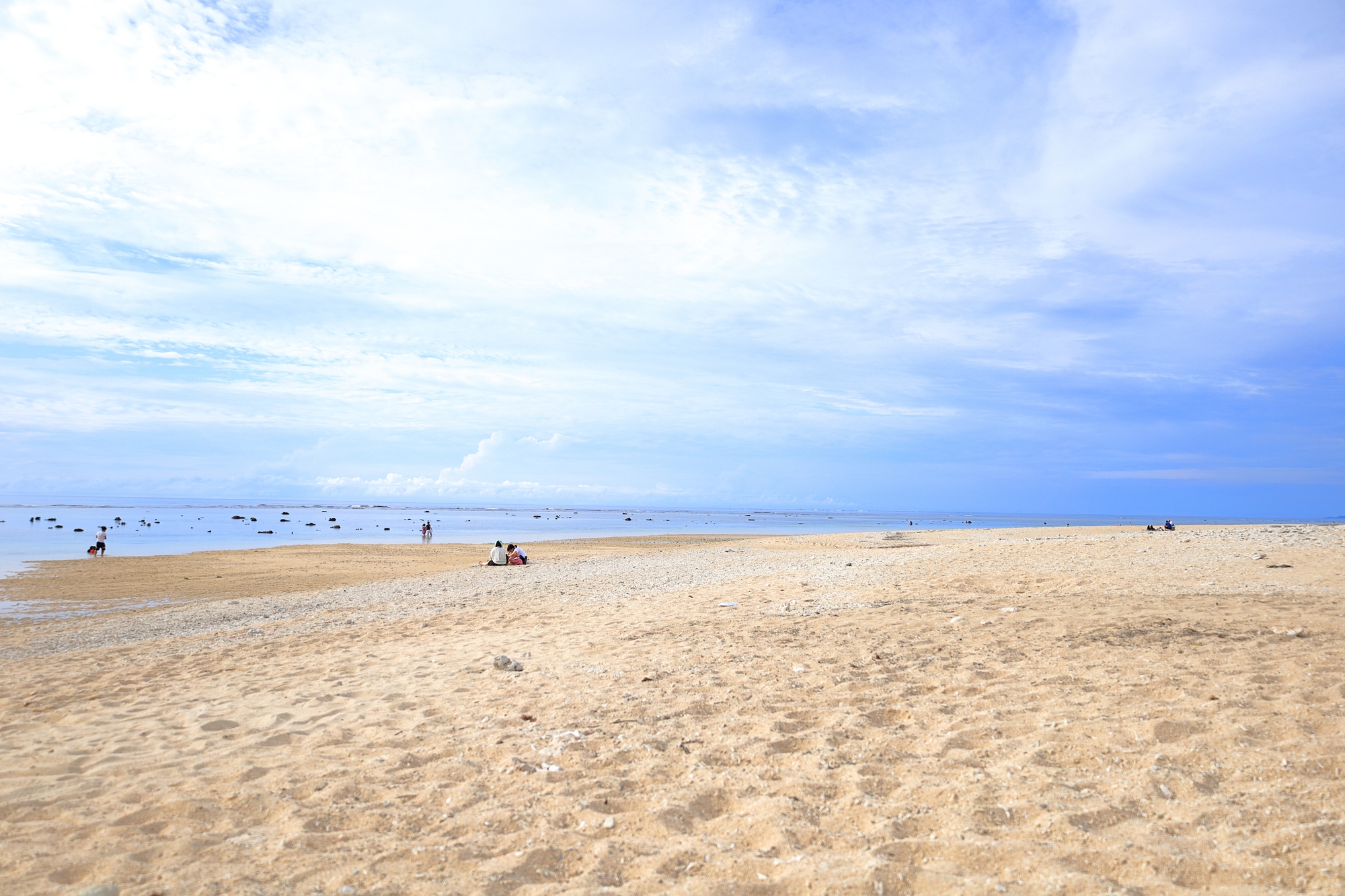
“If I’m going to snorkel on Ishigaki, where should I go first?”—to that question, both local guides and guidebooks name Yonehara Beach in unison. By swimming just a little from the water’s edge, a world of coral reef and tropical fish spreads out—one of Ishigaki’s most popular spots. Once you get out of the sea, showers and restrooms are available too, an environment set up so even first-timers can enjoy it with peace of mind.
That said, Yonehara Beach isn’t just a beautiful beach. It’s a place designated a “swimming-danger zone,” and the reality is that drowning accidents occur every year. In this guide, we’ve gathered information for enjoying Yonehara Beach’s appeal to the fullest, along with cautions for spending your time safely. From snorkeling beginners to the experienced, do check it before you visit.
What Kind of Beach Is Yonehara Beach? Ishigaki’s No. 1 Snorkeling Spot
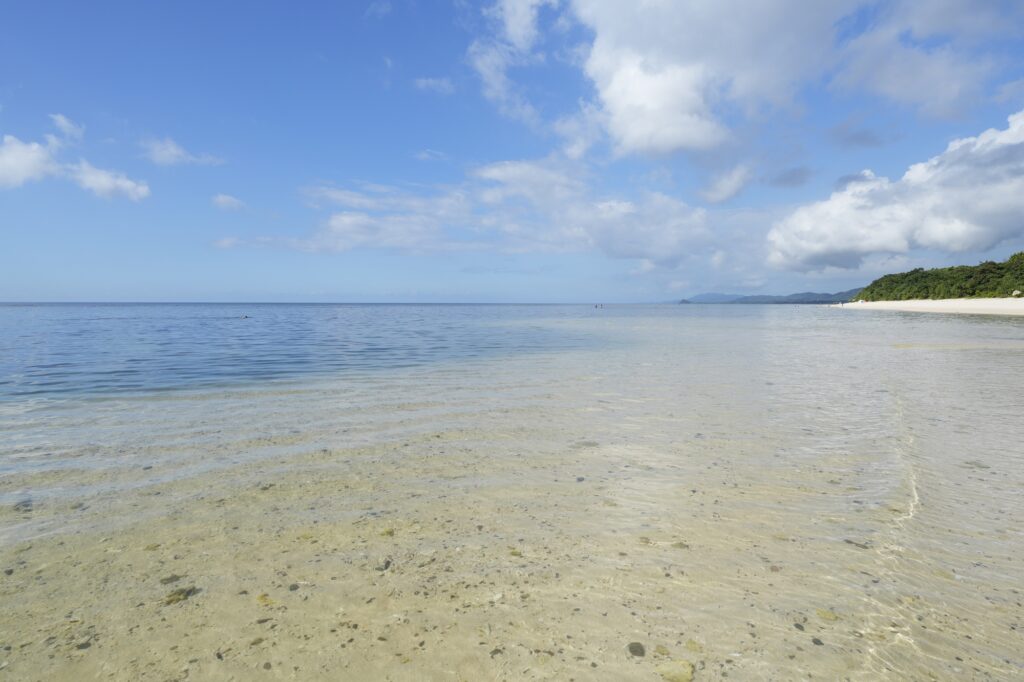
Yonehara Beach is a white-sand beach about 1 km long spreading out in the Fukai area of northern Ishigaki. One of the beaches most loved by locals, it’s a representative Ishigaki snorkeling spot known to tourists too. The contrast of the emerald-green sea and the white sand is the typical beauty of a southern resort itself.
The biggest reason this beach differs from others is that you can encounter coral reef and tropical fish by swimming just a few meters from the water’s edge. At many snorkeling spots you need to swim out to the offing, but Yonehara is a rare place that combines ease with the appeal of the underwater world.
A treasure house of nature designated as Iriomote-Ishigaki National Park
Yonehara Beach was designated as Iriomote-Ishigaki National Park in April 2010. This is a system for protecting Ishigaki’s natural environment at the national level, and taking coral reef, tropical fish, shells and the like is entirely prohibited. From the standpoint of landscape conservation, no artificial jellyfish-prevention net is installed either.
In other words, Yonehara Beach is a place where you can experience “untouched nature just as it is, with as little human hand as possible.” In return, manners that respect nature and self-management are required of visitors too. Taking creatures is of course prohibited, as are the use of harpoons or spearguns, and smoking or BBQ on the shore. By observing the rules, we can leave this beauty for the next generation too.
The rare landform called “Yonehara Double Reef”
Offshore from Yonehara Beach, about 200 m out, spreads a rare landform called “Yonehara Double Reef.” A structure where the coral reef overlaps in two layers, the inside is a calm shallows, and the outside is a diving point where the water depth suddenly drops. As one of Japan’s leading double-coral-reef landforms, it draws attention from divers and snorkelers.
However, the Double Reef is dangerous for individual swimming. Because it’s a landform where the current is fast and the depth drops at once to nearly 20 m near the edge, accessing it on a guide-accompanied tour is the iron rule. You can fully enjoy coral and fish in just the shallows within the reef, so there’s no need to force your way out to the offing.
Five Reasons Yonehara Beach Snorkeling Is Popular
For those who wondered “Why is Yonehara Beach so popular?”, we’ve organized the reasons it’s loved by snorkelers. It’s packed with appeal that satisfies local regulars and tourists alike.
| Reason | Specifics |
|---|---|
| The density of fish | Just proceeding over the sandy bottom from the water’s edge, you encounter large schools of mullet, scad, and damselfish |
| The closeness from beach to coral | Even at low tide, swimming a few meters reaches the coral-reef area. Beginners don’t tire easily |
| Free facilities are extensive | Free restrooms and shower rooms available—”comfortable even after you get out” |
| Many visitors give a sense of security | There are no lifeguards, but there’s foot traffic—it’s not a lonely sea |
| The parking lot is large | A paid lot for about 60 cars plus a free lot are secured |
The tropical fish and sea creatures you can encounter
The creatures you’re likely to encounter while snorkeling at Yonehara Beach are truly a “natural aquarium.” We’ll introduce the representative faces.
- Damselfish (deba and ruri types): schools of small fish glowing blue. They swim elegantly around the coral
- Boxfish: a popular fish whose trademark is its endearing square face
- Clownfish (Nemo): a fish that lives in symbiosis with sea anemones, hugely popular with kids too
- Spangled emperor (a snapper): go a little offshore and you can see large individuals swimming serenely
- Sea turtle: if you’re lucky you can encounter one. The probability is higher on a Blue Cave tour
- Lionfish: beautiful, but it has venom, so beware of getting too close
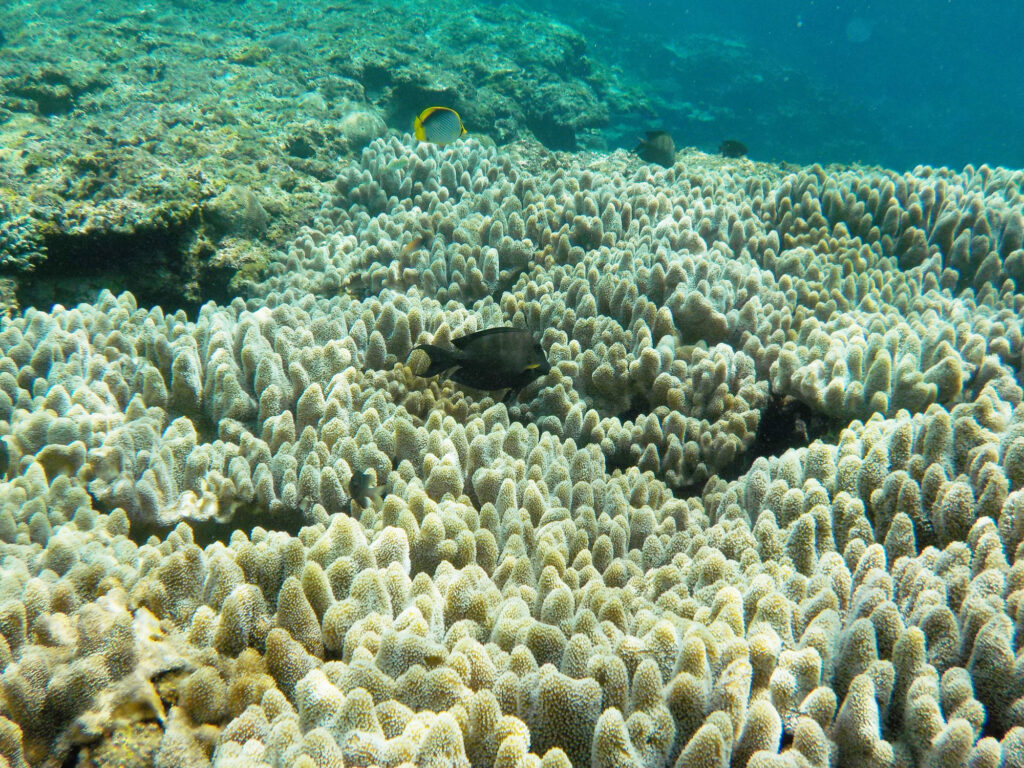
In the coral-reef area, branching coral, table coral, Porites and the like dot the seabed, and small fish live in the gaps between them. A world spreads out so absorbing that just observing it makes you forget the time.
Recent coral conditions and the current situation
Unfortunately, Yonehara Beach’s shallow-water coral declined considerably around 2022–2023. The cause was a rise in seawater temperature due to few typhoons, and coral bleaching. The former “coral clusters clearly visible from the beach” are in a devastated state.
That said, not everything has been lost. The offshore coral still remains, and new coral is little by little starting to grow too. Rather than over-expecting “coral clusters like in the past,” we recommend visiting with the feeling of enjoying the nature that exists now, just as it is. Even so, compared with other beaches, Yonehara still boasts a top-class density of fish and coral on Ishigaki.
Access to Yonehara Beach and Parking Information
Let’s organize the access method and parking information for Yonehara Beach. A rental car is overwhelmingly convenient, but visiting by bus isn’t impossible either.
Access by rental car / car
| Departure point | Time needed | Route |
|---|---|---|
| New Ishigaki Airport | About 20–30 min | National Route 390 → Pref. Route 209 → 87 → turn left onto 79, 2 km ahead on the right |
| Ishigaki Port Remote-Island Terminal | About 30 min | North on Pref. Route 79 from town, Kabira Bay on the left |
| Kabira Bay | About 10 min | Right away heading north on Pref. Route 79 from Kabira Bay |
The drive from town is a pleasant route running along coastal Pref. Route 79. When the “Yonekoyaki Kobo,” famous for its vividly colored shisa objects, appears along the way, Yonehara Beach is right there. Since you can head over while enjoying the sea scenery, you can savor the travel time as part of the sightseeing too.
Access by bus / public transport
Without a rental car, use the Azuma Kotsu local bus. You can go via several routes from the town’s bus terminal, and the nearest bus stop is “Yonehara Campground.” After getting off, you arrive at the beach in a few minutes on foot.
However, the number of departures is very few, about 1–2 a day. Since waiting a long time for a bus while wet after snorkeling isn’t realistic, we strongly recommend using a rental car or taxi. If you must visit by bus, be sure to check the round-trip timetable in advance.
Using the free and paid parking lots
Yonehara Beach has two kinds of parking lots. Grasping the features of each lets you move smoothly on the day.
| Type | Fee | Capacity | Features |
|---|---|---|---|
| Free lot | ¥0 | About 7–8 cars | Tends to fill up from early morning. A matter of luck |
| Paid lot | ¥500/day | About 60 cars | Shower, restroom and changing-room use included. Parking guaranteed |
Especially in the summer high season, it’s not rare for the free lot to fill up by around 8 a.m. If you want to park for sure, it’s wise to choose the paid lot (¥500) from the start. Considering it includes shower and changing-room use, it’s by no means expensive.
Important Cautions for Enjoying Yonehara Beach Safely
While Yonehara Beach is beautiful, it’s a “swimming-danger zone” where drowning accidents occur every year. Without firmly grasping safety measures, a precious fun memory can be ruined. From here, we organize the cautions you definitely want to know before visiting.
The greatest threat, the “rip current (reef current)”
What to be most wary of at Yonehara Beach is the rip current (reef current). Because of the landform surrounded by a coral reef, a strong current heading from shore to the offing through the breaks in the reef occurs. Once caught in this current, even an adult can become unable to swim back.
Let’s remember the points for not being swept away by a rip current.
- Be sure to check the rip-current-occurrence map posted near the beach entrance or restrooms
- Don’t swim out too far toward the offing; enjoy the shallows within the reef
- If you are swept away, rather than swimming straight toward shore, swim sideways (parallel to the shoreline) to escape the rip current
- Act calmly without panicking, so as not to exhaust your strength
- Always wear a life jacket (with buoyancy, the chance of being saved even if swept away is high)
Belongings / equipment | a life jacket is essential
To enjoy Yonehara Beach safely, preparing equipment is crucial. At minimum, have the following items ready.
- Life jacket: always wear it even if confident in swimming. The most important life-protecting equipment
- Snorkel set (mask, snorkel, fins): rentable
- Rash guard / wetsuit: doubles as sunburn prevention, venomous-creature measures, and warmth
- Marine shoes: essential so you don’t cut your feet on coral or rocks
- Drinks: frequent hydration as a heatstroke measure
- Sunscreen: choose a coral-friendly “reef-safe” type
- Towel / change of clothes: after the shower
The shop at the beach entrance also rents snorkel sets and floats, so you can play even if you go empty-handed. However, since it depends on the day’s stock, in busy periods it’s more certain to inquire with the shop in advance or prepare your own equipment.
Dangerous creatures to watch for
Beautiful as Yonehara Beach is, creatures with venom or aggression are not few. The iron rule is not to touch or approach even if you encounter one.
| Creature | Features / how to deal |
|---|---|
| Habu jellyfish | Appears in summer. Transparent and hard to see, with strong venom. Don’t expose skin—use a rash guard |
| Portuguese man o’ war | A highly venomous creature with a blue float. It stings even after death, so never touch it |
| Titan triggerfish | A large fish. During breeding season (June–August) it’s territorial and aggressive. If you meet one, quietly move away sideways |
| Lionfish | Venom in its beautiful fins. Just observe, don’t touch |
| Coral | An endangered, protected species. It has coral toxin too, so never step on or touch it |
Since no habu-jellyfish-prevention net is installed, the basic measure is to minimize skin exposure. Rather than short sleeves and shorts, choosing a rash guard or long-sleeve-type swimwear is reassuring.
Cautions for the swimming season | beware of the north wind in winter
Because Yonehara Beach is located in northern Ishigaki, it’s strongly affected by the winter north wind. From around November to March, waves tend to be high, and there are days when swimming is banned. If snorkeling is your main purpose, visiting in the April–October season is recommended.
Even in summer, refrain from swimming on days when a typhoon is approaching or it’s strongly windy. Make it a habit to be sure to check the day’s weather forecast and sea conditions before setting out.
Yonehara Beach Basic Information Summary
| Item | Details |
|---|---|
| Location | Fukai, Ishigaki City, Okinawa |
| From New Ishigaki Airport | About 20–30 min by car |
| From the remote-island terminal | About 30 min by car |
| Hours | Free to view/use |
| Closed | None |
| Admission | Free |
| Parking | Free, about 8 cars; paid, about 60 cars (¥500/day) |
| Shower | Free if using the paid lot / coin shower (¥200 for 10 min) available |
| Restrooms | Yes |
| Changing room | Yes (paid-lot users) |
| Rental | Snorkel sets, floats, etc. handled at the shop |
| Prohibited | Taking creatures, using harpoons/spearguns, BBQ, smoking |
Note that the adjacent Yonehara Campground has closed. Information that “Yonehara Beach has closed” circulates online, but this is a misunderstanding of the campground’s closure. The beach itself can be used without problem as of 2026, so visit with peace of mind.
Nearby Spots to Enjoy Together with Yonehara Beach
If you visit Yonehara Beach, since you’re there, we recommend touring nearby spots together too. You can build a full course using half a day to a day.
The fantastical “Blue Cave”
About 5 minutes by car from Yonehara Beach is the “Blue Cave.” A popular spot where the light entering the cave shines blue due to wavelength, and a mysterious superb view spreads out. Since access on your own is difficult, joining a snorkeling tour is common. There are also plenty of tours that pair it with Yonehara’s beach snorkeling.
Michelin three-star “Kabira Bay”
Going about 10 minutes south by car brings you to Ishigaki’s greatest superb view, Kabira Bay. A sightseeing landmark that earned three stars in the Michelin Green Guide, where you can enjoy the Kabira Blue sea by glass boat. After swimming at Yonehara, the royal-road route is to move to Kabira Bay for lunch.
The shisa park of “Yonekoyaki Kobo”
Yonekoyaki Kobo, along the road heading to Yonehara Beach, is a photo spot where vividly colored giant shisa objects line up in a row. Outstandingly SNS-worthy, it’s perfect for a drive detour. You can also buy cute shisa ceramics perfect as souvenirs.
The world’s most beautiful palm grove, “Yaeyama palm”
Right near Yonehara Beach is also the Yonehara Yaeyama Palm Grove, designated a national Natural Monument. A precious area where 25-m-tall Yaeyama palms, rated the world’s most beautiful palms, grow wild. Being able to enjoy both sea and forest is the charm of the Yonehara area.
Yonehara Beach FAQ
Is it OK even for snorkeling beginners?
Since you can encounter coral and fish by swimming just a few meters from the water’s edge, it’s a beach suited to beginners too. However, note that “beginner-OK” doesn’t equal “safe.” Always wear a life jacket, and never go to deep areas. If you’re anxious, joining a guided tour is by far recommended.
Can I enjoy it with kids?
You can enjoy it with children, but always with an adult. Since there’s a rip-current risk, the iron rule is not to let children go to the offing alone. Just playing at the shallow water’s edge, you can encounter many small fish and enjoy it. Parent-child snorkeling tours for ages 3 and up are also held, so do consider them.
Which is better, a tour or going independently?
Snorkeling at Yonehara Beach can be enjoyed independently, but for first-timers or those not confident in swimming, joining a tour is recommended. The guide handles safety management and guides you to the best points, so there are no misses. If you want to go to Yonehara Double Reef or the Blue Cave, a tour is essential.
What’s the best snorkeling season?
Considering both water temperature and sea conditions, May–October is the best season. Especially late June–July after the rainy season ends, and September–early October before typhoon season, sea conditions tend to be stable, which is recommended. In winter, waves get high with the north wind, so it’s safer to avoid visiting for snorkeling purposes.
Can I enjoy a full day there?
If you alternate between snorkeling and resting on the sand, you can spend a leisurely half day to a day. However, since there’s little shade, bringing a parasol or tent is the trick for comfortable time. If you bring a lunchbox, please thoroughly take your trash home. Since BBQ is prohibited, keep eating and drinking to light snacks.
Summary | Savor the Appeal of Ishigaki’s Sea at Yonehara Beach
Yonehara Beach is one of Ishigaki’s foremost snorkeling spots where you can encounter coral and tropical fish a few meters from the water’s edge. A treasure house of nature designated as Iriomote-Ishigaki National Park, it also holds the rare landform of Yonehara Double Reef. With free facilities and parking in place too, it’s a famous spot loved widely from beginners to divers.
However, beautiful as it is, it’s also a place where accidents due to rip currents occur every year as a “swimming-danger zone.” If you observe these four—wearing a life jacket, protecting your skin with a rash guard, watching for dangerous creatures, and not overdoing your swimming range—you can savor Ishigaki’s sea safely.
About 20–30 minutes by car from New Ishigaki Airport, a prime location enjoyable as a set with Kabira Bay and the Blue Cave too. At Yonehara Beach, which you could call “where Ishigaki snorkeling starts,” make an unforgettable sea memory. The emerald-green sea and vividly colored fish will surely welcome you.
Book Your Rental Car Here


※For pick-ups or returns outside of business hours, please contact us by phone.
Access
Ishigaki Island Mirais Rent a Car Ishigaki Airport Branch
783-1 Shiraho, Ishigaki City, Okinawa 907-0242, Japan
*The address above shows a wide area. For the exact location, please click “View larger map” or “Open in Google Maps.”
Ishigaki Island Mirais Rent a Car Ishigaki Downtown Branch
314 Okawa, Ishigaki-shi, Okinawa 907-0004, Japan
*The address above shows a wide area. For the exact location, please click “View larger map” or “Open in Google Maps.”
