
Hirakubozaki Lighthouse | Ishigaki's Northernmost Scenery & 'Lighthouse of Love' Guide
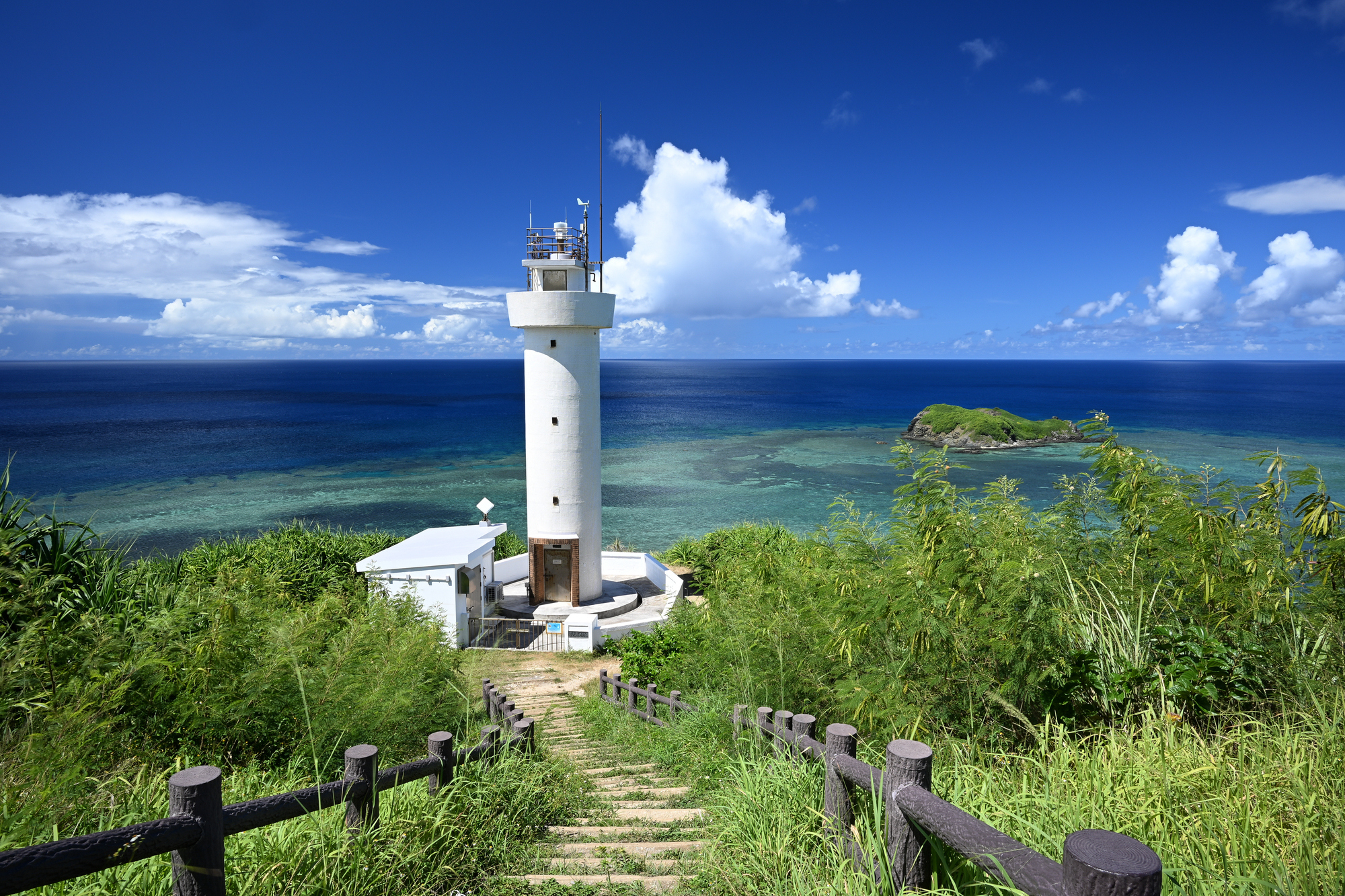
As you drive north and ever north on Ishigaki, the scenery eventually changes into a quiet landscape where sugarcane fields and pastures spread out, and the sight of Japanese Black cattle leisurely grazing comes into view. And at the very end, a single white lighthouse shining amid blue sea and blue sky appears—that is Hirakubozaki Lighthouse.
Located at Ishigaki’s northernmost point, this lighthouse is known for its one-and-only panoramic superb view—the Pacific Ocean on the right hand, the East China Sea on the left—and draws attention from romanticists nationwide as a “lighthouse in love.” It doesn’t have the bustle of a place like Kabira Bay, but it’s a place with the emotion unique to the island’s farthest edge, making you feel “I’m glad I came all this way.”
What Is Hirakubozaki Lighthouse? Ishigaki’s Northernmost Superb-View Spot
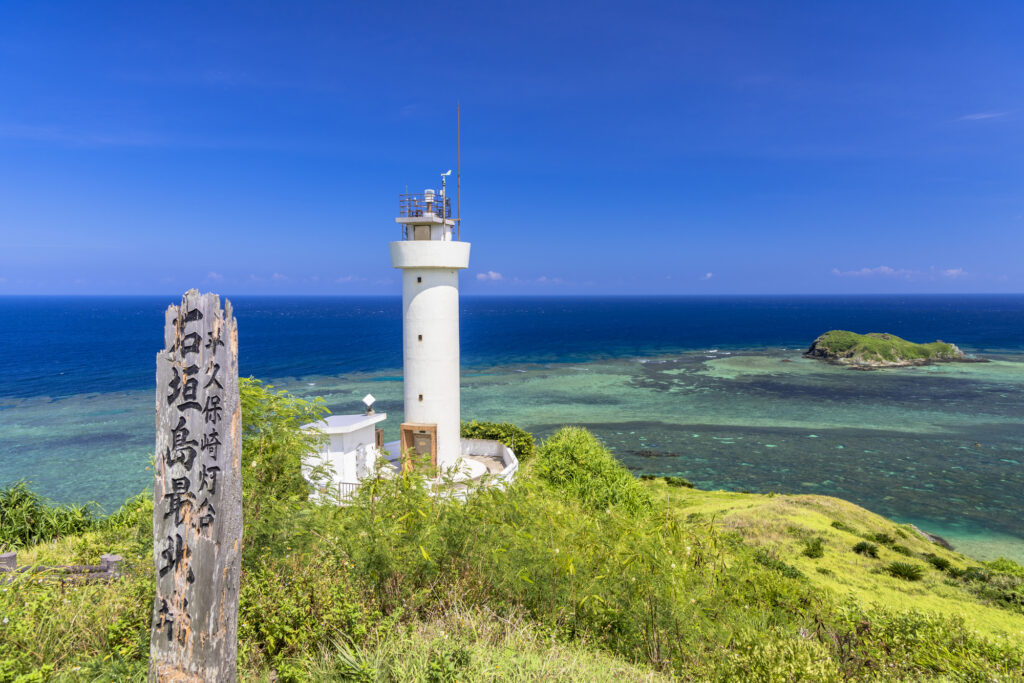
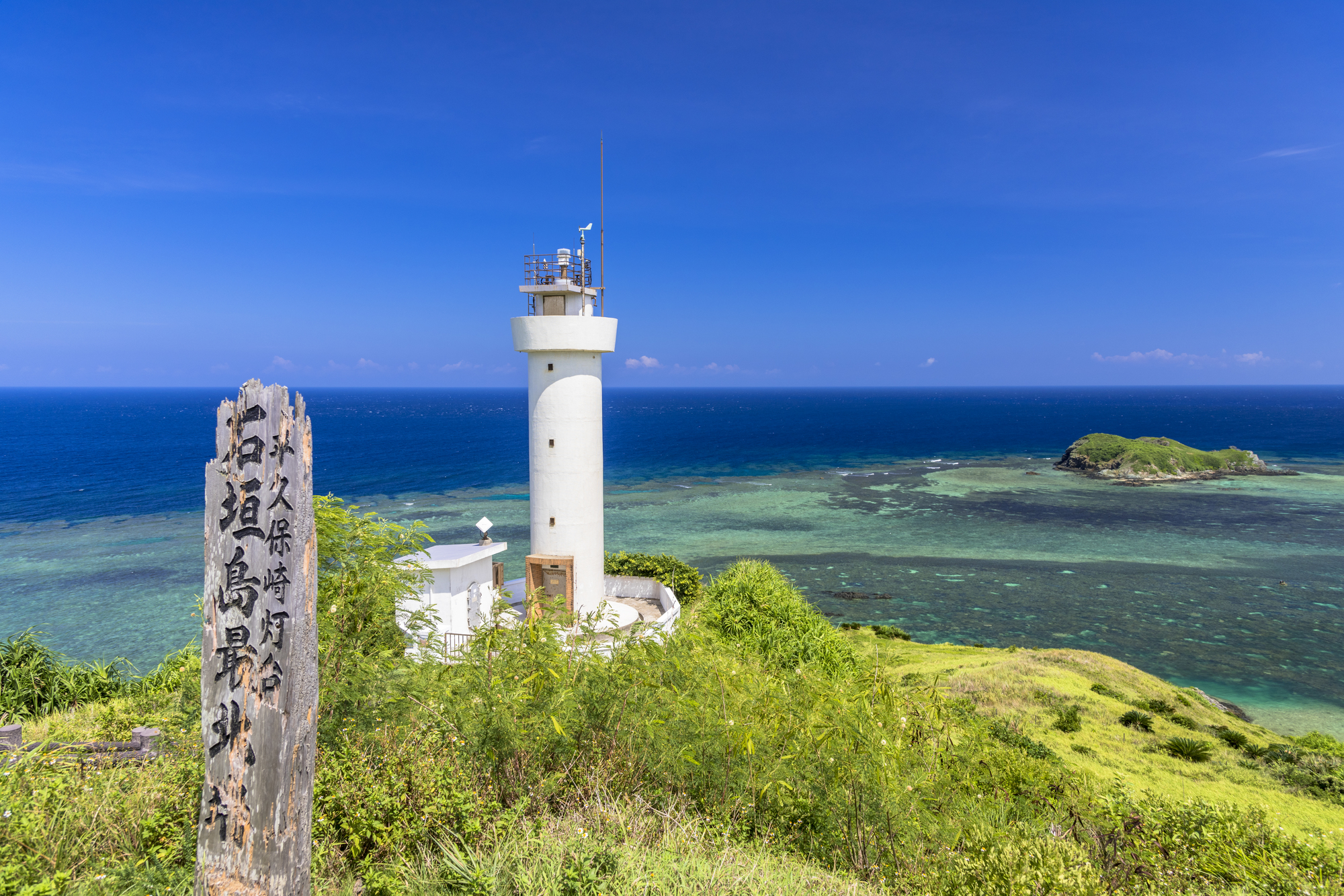
Hirakubozaki is a cape at the very tip of the Hirakubo Peninsula, jutting out long and narrow from Ishigaki’s northeast. From atop the hill where the lighthouse stands, the view is so open that the horizon looks rounded, and a scene spreads out where the coral-reef sea draws a gradation from cobalt blue to emerald green. On a clear day, you can even survey distant Tarama Island.
Though it yields to Kabira Bay and Shiraho in fame as a tourist site, in travelers’ reviews voices like “the place that moved me most on Ishigaki” and “I absolutely want to come again” never cease—a superb-view spot known to those in the know.
The tip of the Hirakubo Peninsula, called the “shisa’s tail”
Viewing Ishigaki from the sky, the whole island is said to look like a shisa (Okinawa’s guardian deity) lying down. The island’s main part forms the shisa’s body, and because the Hirakubo Peninsula, stretching long and narrow to the northeast, looks like the shisa’s tail, this peninsula is locally called the “shisa’s tail.” Hirakubozaki Lighthouse is located right at that “tail’s tip,” and it’s also the place marking Ishigaki’s northernmost point.
Most of the Hirakubo Peninsula is designated within Iriomote-Ishigaki National Park, and because development is restricted, an untouched natural environment is conserved. The pastures spreading along the way as you head north up the peninsula, and the sea scenery showing different hues on the right and left hands, are themselves the real thrill of the journey.
Basic information
| Item | Details |
|---|---|
| Official name | Hirakubosaki Lighthouse |
| Address | 234-50 Hirakubo, Ishigaki City, Okinawa 907-0331 |
| Admission | Free |
| Hours | 24 hours (entry possible at night too) |
| Parking | Free (capacity about 8–10 cars) |
| Restrooms | Yes (multipurpose restroom available) |
| Vending machine | Yes (drinks only) |
| Shop / eatery | None (a café about 4 min by car away) |
| Time-needed guide | About 15–30 min |
| From New Ishigaki Airport | About 40–50 min by car |
| From Ishigaki town | About 60–80 min by car |
By the nature of a cape, Hirakubozaki is always a windy place. Take care that your hat and belongings aren’t blown away. Gusts can blow especially atop the observation point and on the promenade. Also, there are no convenience stores or eateries nearby. Be sure to prepare drinks and light meals in advance before heading there.
Hirakubozaki Lighthouse’s Four Major Highlights
Some may think, “It’s just the northernmost point—what else is there?” But Hirakubozaki is a place where several special experiences overlap, born precisely from its northernmost location. We’ll introduce the four highlights in order.
① A 360-degree panorama, the Pacific on the right and the East China Sea on the left
Hirakubozaki Lighthouse’s greatest appeal is its overwhelming view. Walking up the hill from the parking lot along the promenade and standing at the tip where the lighthouse is, a panorama surrounded by sea on all 360 degrees spreads before you. The Pacific Ocean on the right hand (east) and the East China Sea on the left hand (west)—a place where you can gaze at two seas at once is only here on Ishigaki.
Peering down from in front of the lighthouse, a sea gradation so beautiful it takes your breath away spreads out, shifting from cobalt-blue open ocean to emerald-green reef. Furthermore, in the surrounding pastures Japanese Black cattle leisurely graze, and the southern original scenery woven of sea, sky and green spreads before your eyes.
Also, about 400 m offshore from the lighthouse floats an uninhabited islet called Ufujishi-panari. This reef islet is also known as a habitat for the erabu sea snake, conveying the richness of the natural environment.
② A pure-white lighthouse certified as a “lighthouse in love”
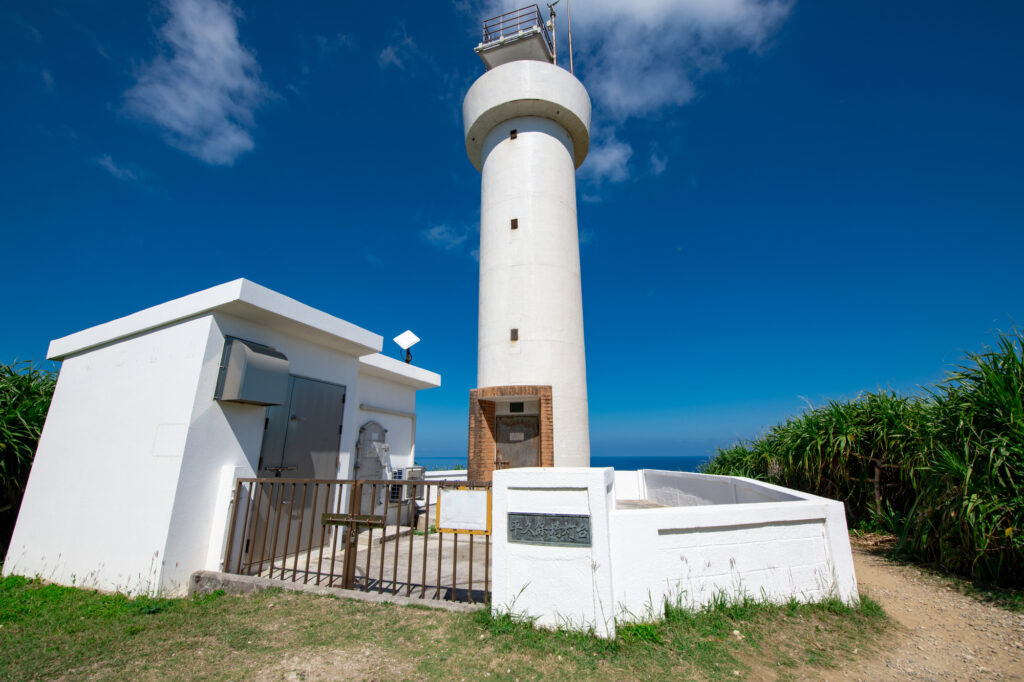
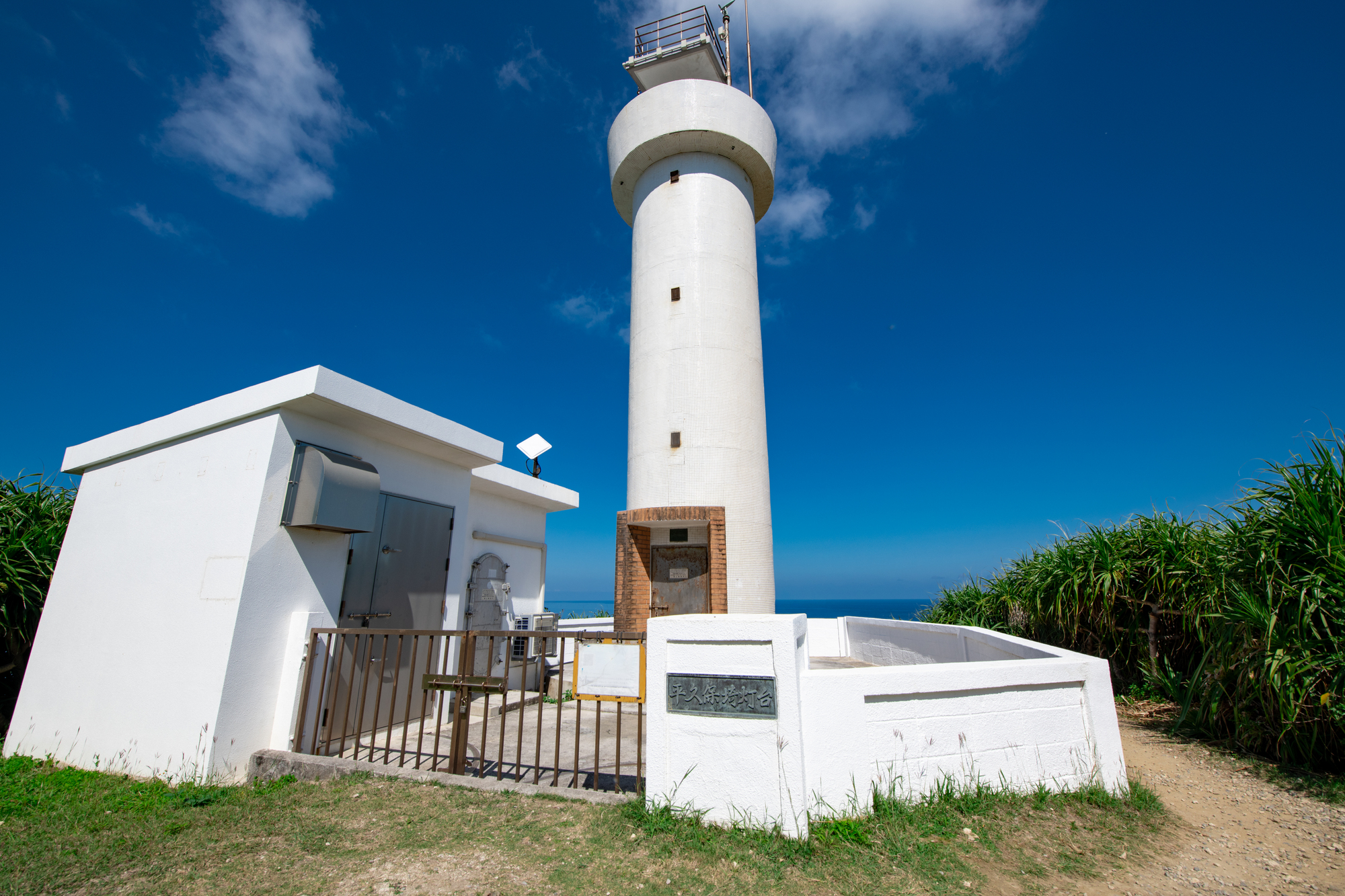
Hirakubosaki Lighthouse was certified in 2016 as a “lighthouse in love” selected by the Japan Romantist Association and the Nippon Foundation. Out of over three thousand lighthouses nationwide, this certification, given to just 21 lighthouses in 20 areas, indicates its value as a “sacred site of love.”
The reason for certification lies in the beauty created by the contrast of the pure-white lighthouse with the blue sea and sky, and the romantic atmosphere the “northernmost point” location holds. A heart-shaped “lighthouse in love” sign is set up around the lighthouse, making it a popular photo spot that couples visit for commemorative shots.
Note that you can’t enter the lighthouse interior, but you can walk around the lighthouse and view it up close. The combination of the pure-white outer wall with the blue sky and sea makes a picture from any angle.
③ The Ishigaki northernmost-point monument and photo spots
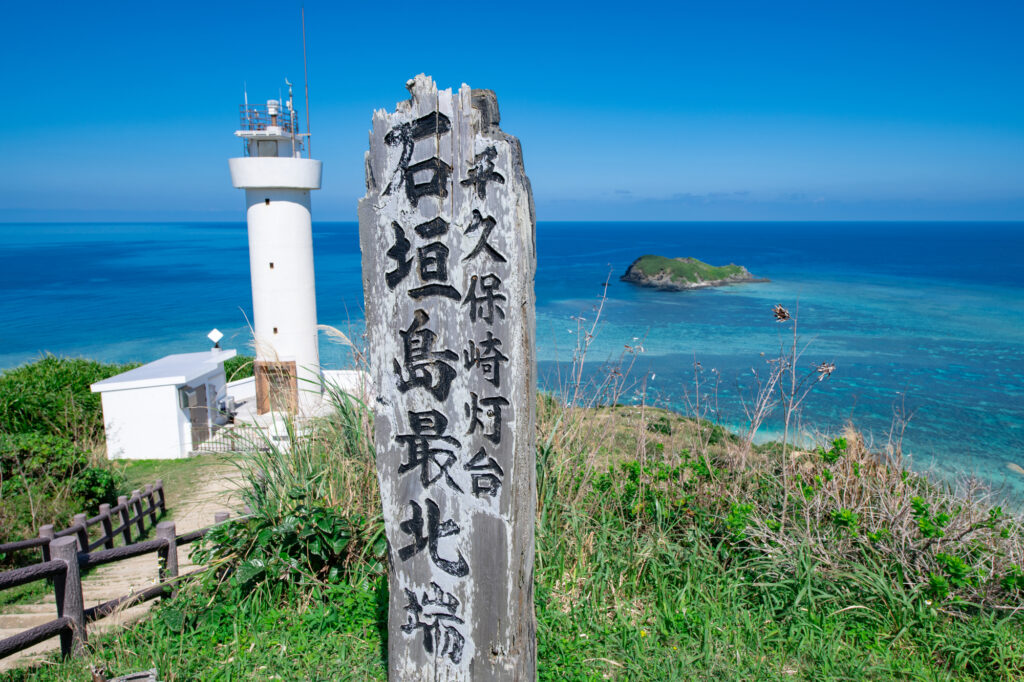
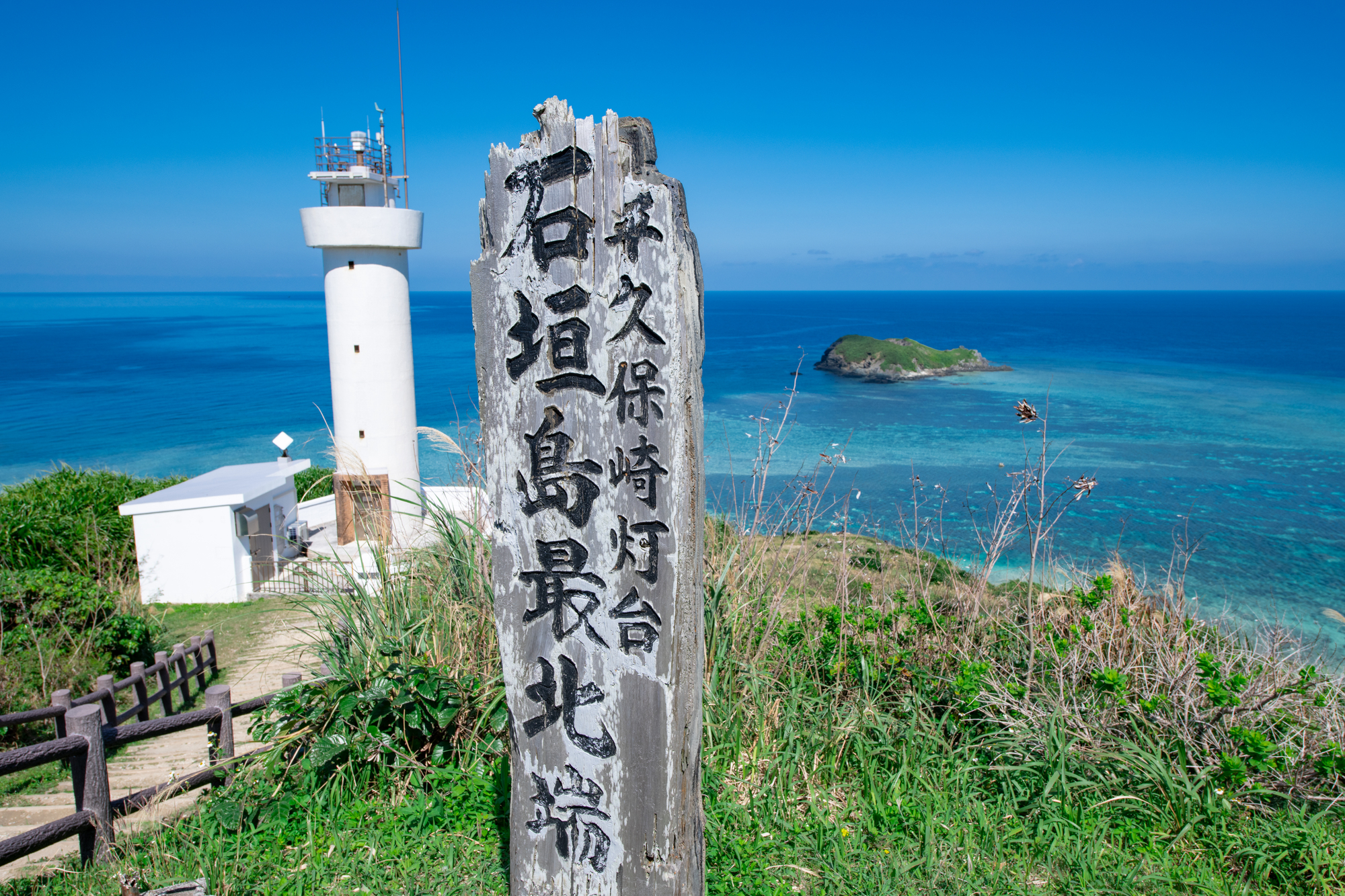
Midway along the promenade heading from the parking lot to the lighthouse, beside the stairs, is a monument engraved “Ishigaki’s Northernmost Point.” Taking a commemorative photo in front of this monument is a standard part of a Hirakubozaki visit. The spot where the monument stands is a small hill, and a photo angle surveying the Hirakubo Peninsula from there is a popular composition with travelers too.
Also, near this monument a sign indicating the direction of the Senkaku Islands is set up too, reminding you anew of the sense of distance to Japan’s southwesternmost islands. When you stand at the island’s farthest edge, it’s a precious place where you can experience Japan’s expanse, hard to grasp on a map.
The promenade is paved, so you can access near the lighthouse even by stroller or wheelchair. Caution is needed underfoot if you go down to the rocky area around the lighthouse, but you can fully enjoy the superb view even from the promenade.
④ A spot with the trio of sunrise, sunset and starry sky
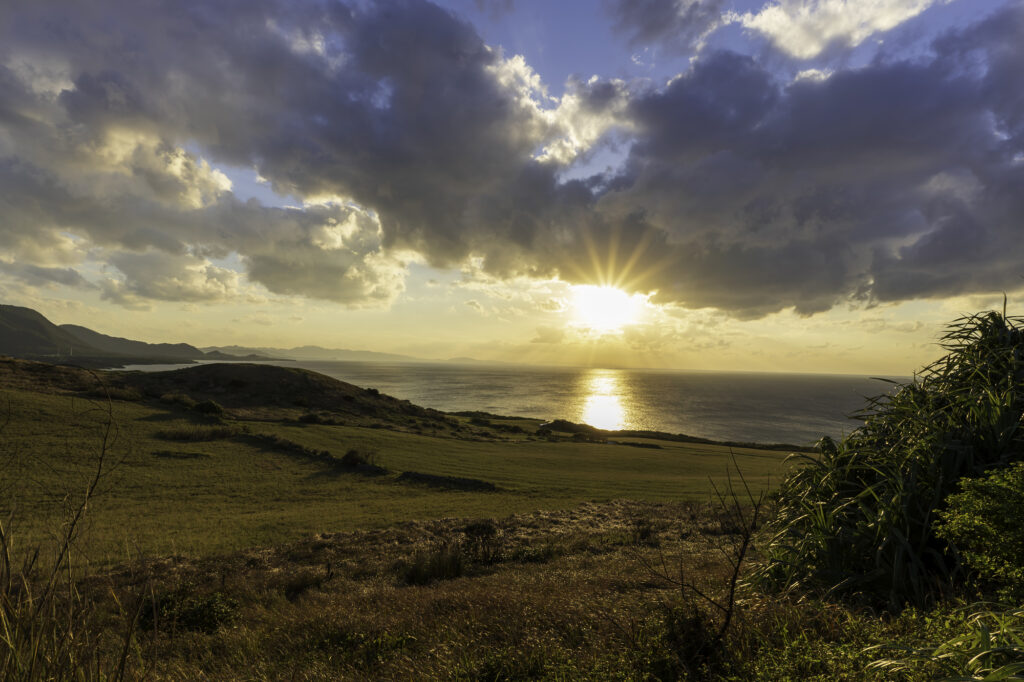
Hirakubozaki Lighthouse is also a spot whose expression changes greatly through the day.
| Time of day | Scenery features | Recommendation |
|---|---|---|
| Morning (around sunrise) | The sunrise rising from the Pacific side makes the waves sparkle, and the lighthouse is wrapped in warm light. A quiet time slot with few tourists | ★★★★★ |
| Daytime (10:00–15:00) | When the sun is high, the sea’s transparency and color are most vivid. A blue gradation rivaling Kabira Blue | ★★★★★ |
| Evening (around sunset) | The red sunset sinking on the East China Sea side dyes the horizon. An expression entirely different from daytime, fantastical | ★★★★☆ |
| Night (stargazing) | Within the International Dark-Sky-Association-certified “Yaeyama Dark Sky Place.” No light pollution, and the Milky Way and Southern Cross can sometimes be seen with the naked eye | ★★★★★ |
Nighttime stargazing in particular is a hidden charm of Hirakubozaki. The Yaeyama Islands, including Ishigaki, are certified as a “Yaeyama Dark Sky Place” by the International Dark-Sky Association, known as one of Japan’s foremost stargazing spots. At the northernmost land where the town’s light doesn’t reach, nights when you can see a full sky of stars and the Milky Way with the naked eye are not few. Depending on the season, observing the Southern Cross is possible too.
However, at night the road to the lighthouse is very dark, and smartphone navigation can lose signal. Confirm your route in advance and bring a flashlight before heading there.
Hirakubozaki Parking Information
We often hear voices saying, “I’m worried about whether I can park.” Knowing the situation in advance is reassuring.
| Item | Details |
|---|---|
| Parking fee | Free |
| Capacity | About 8–10 cars (a few spaces on the roadside too) |
| Large buses | Parking space is narrow and unsuited to large buses. Group tours should confirm |
| Crowded periods | Can fill up during summer break, Golden Week and year-end/New Year. Take care especially at the sunset and starry-sky time slots |
| Distance from parking | About 3–5 min on foot to the lighthouse. The promenade is paved |
| Payment | Not needed, as it’s free |
Many voices say that during normal sightseeing hours (morning to evening) there’s relatively room and it rarely fills up. However, it can get crowded at dusk in peak periods and on weekends, so we recommend arriving early with time to spare. If you can’t park in the lot, there are a few spaces on the road shoulder just before the entrance.
How to Get to Hirakubozaki Lighthouse
By its location at Ishigaki’s northernmost point, access to Hirakubozaki needs a certain amount of time. But the scenery along the way is beautiful too, making the drive itself an enjoyable journey.
Rental car (recommended)
Access to Hirakubozaki Lighthouse is most convenient and realistic by rental car. The northern Ishigaki area has very few buses, and with a rental car you can freely drop by superb-view spots along the way too.
| Departure point | Route | Time needed |
|---|---|---|
| New Ishigaki Airport | National Route 390 → north on Pref. Route 206 | About 40–50 min |
| Ishigaki town / remote-island terminal | Pref. Route 79 → north on Pref. Route 206 | About 60–80 min |
| Kabira Bay | Pref. Route 79 → north on Pref. Route 206 | About 40 min |
The road is well-maintained and easy to drive, so even first-time travelers can drive with peace of mind. A sign is set up at the entrance to the lighthouse, so you’ll hardly get lost. However, the road narrows a bit just before the parking lot, so caution for oncoming cars is needed.
Local bus
Even without a rental car, it’s possible to visit Hirakubozaki Lighthouse by local bus. However, convenience isn’t high, so checking the timetable in advance is essential.
- Route: Azuma Kotsu bus, route 6 (departs bus terminal, via Ishigaki Airport)
- Daily departures: only 3
- Fare: about ¥980 one way from the airport (the ¥1,000 one-day free pass is good value)
- Drop-off: using the free boarding/alighting section, you can get off at the spot nearest the lighthouse entrance. But it’s about a 20-minute walk to the lighthouse
- Note: always check the return bus times before departing. With few departures, missing one means waiting several hours
Taxi
When using a taxi, since one way costs quite a lot, it’s best to combine it with a plan to move elsewhere after sightseeing, or use it having accepted the round-trip cost.
| Departure point | Fare guide | Time needed |
|---|---|---|
| New Ishigaki Airport | About ¥6,000–7,000 | About 40–50 min |
| Ishigaki town / bus terminal | About ¥8,000–10,000 | About 70–80 min |
Note that there are no taxis stationed around Hirakubozaki. For the return taxi, arrange it by phone in advance, or consider using a “sightseeing taxi” where the driver waits.
How to Enjoy the Journey to Hirakubozaki Lighthouse
It would be a waste to make the travel time to Hirakubozaki “just travel.” Scenery and spots worth dropping by are scattered along the way.
- Yonehara Yaeyama palm grove: about 10–20 min from the start. A palm forest designated a Natural Monument. Easy to drop by as it’s along the national route
- Fukido River mangrove (hirugi) grove: a nature spot where mangroves spread along the river. Easy to access, about 15 minutes needed
- Cattle-grazing scenery: once you enter the Hirakubo Peninsula, you’ll meet the sight of Japanese Black cattle grazing in roadside pastures. You can sometimes see them up close over the fence
- Tamatorizaki Observation Deck: an observation deck where you can view both seas of northern Ishigaki at once. Dropping by on the way back from Hirakubozaki is recommended
- Sabichi Cave: known as Japan’s only “limestone cave that opens to the sea.” About 15 min by car from Hirakubozaki
The northern-loop drive course, dropping by these spots in order while aiming for Hirakubozaki from the airport, is one of the standard routes of an Ishigaki trip. Reckon on roughly 4–5 hours for the time needed.
Spots to Drop By Around Hirakubozaki
Since there are no eateries around Hirakubozaki, it’s important to prepare drinks and food in advance. However, if you move a little by car, there are sightseeing spots nearby.
| Spot name | Distance from Hirakubozaki | Features |
|---|---|---|
| Hirakubo Beach | Within walking distance (visible looking down from the lighthouse) | A hidden-gem beach with few tourists. High transparency, and you can enjoy snorkeling in a quiet environment too |
| Tamatorizaki Observation Deck | About 20–30 min by car | Another superb-view observation deck representing northern Ishigaki. Dropping by on the way back from Hirakubozaki is standard |
| Sabichi Cave | About 15 min by car | Japan’s only “limestone cave that opens to the sea.” Inside, it’s like a natural air conditioner—cool and chilly, ideal for escaping the heat on a hot day too |
| Cafés in the Ibaruma area | About 4–10 min by car | The dining area nearest Hirakubozaki. There are several superb-view cafés you can use for lunch or a break |
There are voices saying Hirakubozaki Lighthouse is “far” and “has nothing,” but precisely because of that it has a special feel that selects its visitors. At the northernmost land away from the town’s hustle, when you stand before the blue sea and white lighthouse spreading out with nothing to block them, the feeling “I’m glad I came all this way” naturally wells up. If you’ve come to Ishigaki, by all means make time to extend your trip to the northernmost land.
Book Your Rental Car Here


※For pick-ups or returns outside of business hours, please contact us by phone.
Access
Ishigaki Island Mirais Rent a Car Ishigaki Airport Branch
783-1 Shiraho, Ishigaki City, Okinawa 907-0242, Japan
*The address above shows a wide area. For the exact location, please click “View larger map” or “Open in Google Maps.”
Ishigaki Island Mirais Rent a Car Ishigaki Downtown Branch
314 Okawa, Ishigaki-shi, Okinawa 907-0004, Japan
*The address above shows a wide area. For the exact location, please click “View larger map” or “Open in Google Maps.”
